You have not yet given permission to place the required cookies. Accept the required cookies to view this content.

Digging Deeper: there is more to it than just growing crops

In the series 'Digging Deeper' you can follow the developments and results of Inagro's own agroforestry plot from the front row. In this edition you can read more about the harvest of the cover crop and the maintenance of the walnut trees, tree strips and hedge.
Unlike many other agricultural plots, an agroforestry plot consists of several (productive or non-productive) components that form part of the system and have a direct or indirect impact on profitability. In addition to the crop itself, the trees, tree strips and hedges on our plot also require time, attention and care.
Below is a brief update on each of these components and the maintenance carried out.

Crop: no yield loss of ryegrass along (young) rows of trees
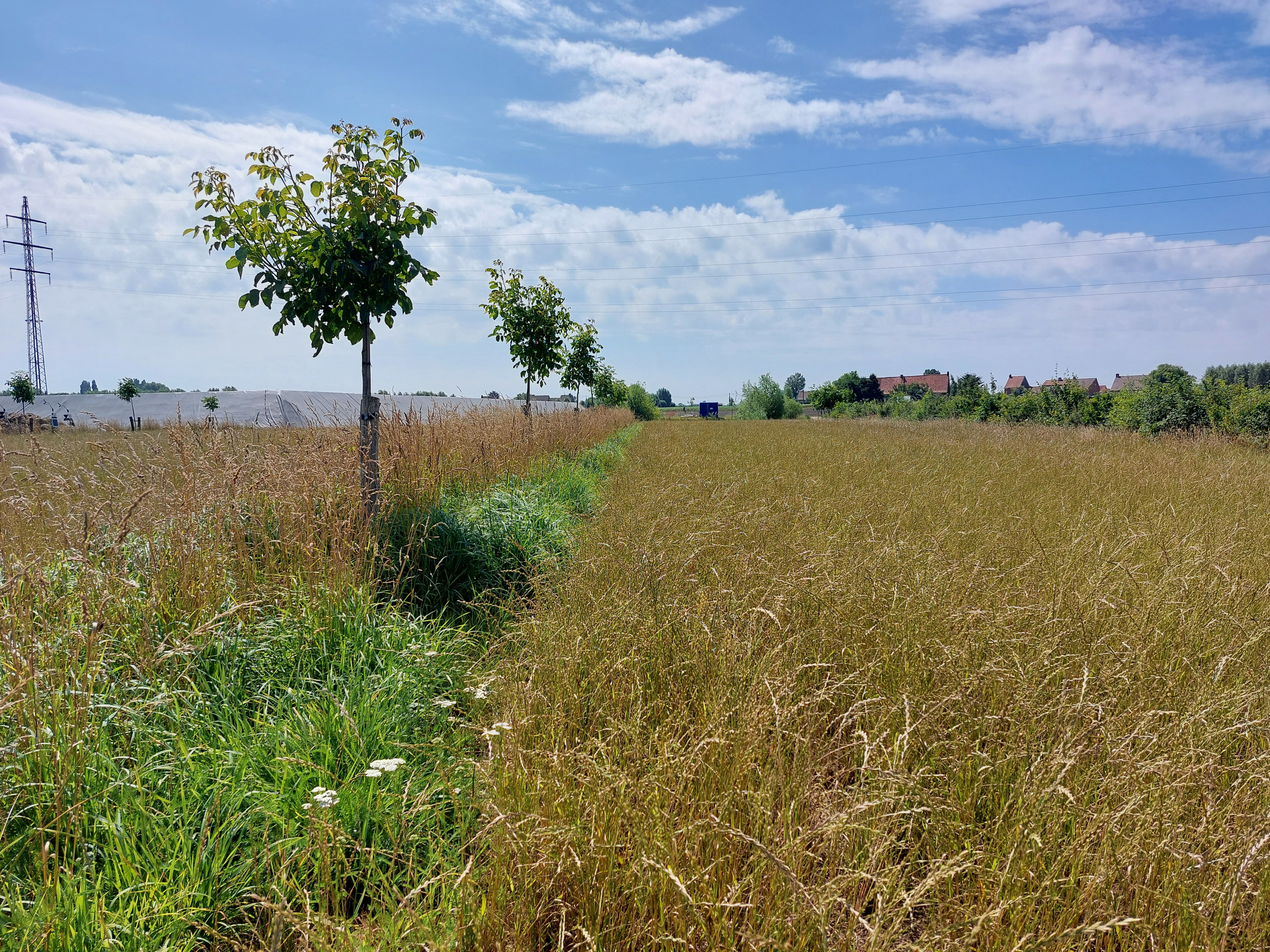
Just as in the first (leek) and second (ryegrass) cropping seasons, we see no impact of the trees on the yield and quality of the cover crop in this third season either. The presence of the young rows of trees did not pose any additional practical challenges for the cultivation of ryegrass, whereas this was the case for leek. For the time being, the loss of cultivation area remains the main impact to be taken into account.
On 14 May, we carried out the first harvest of ryegrass in 2025. With a yield of over 10 tons DM/ha, this is a heavy harvest. We see no statistically significant differences in yield depending on the distance to the row of trees.
On one side (west side) of the row of trees, the yield appears to be lower on average, but this difference is not statistically significant. The slightly lower yield on the west side just next to (-2.5 m) and further away (-10.5 m) from the row of trees is probably due to lodging of the crop in these areas (also visible in the video on the right). This is something that our young trees probably have little impact on at the moment and is more likely due to mowing being slightly too late, possibly in combination with small differences in soil conditions.

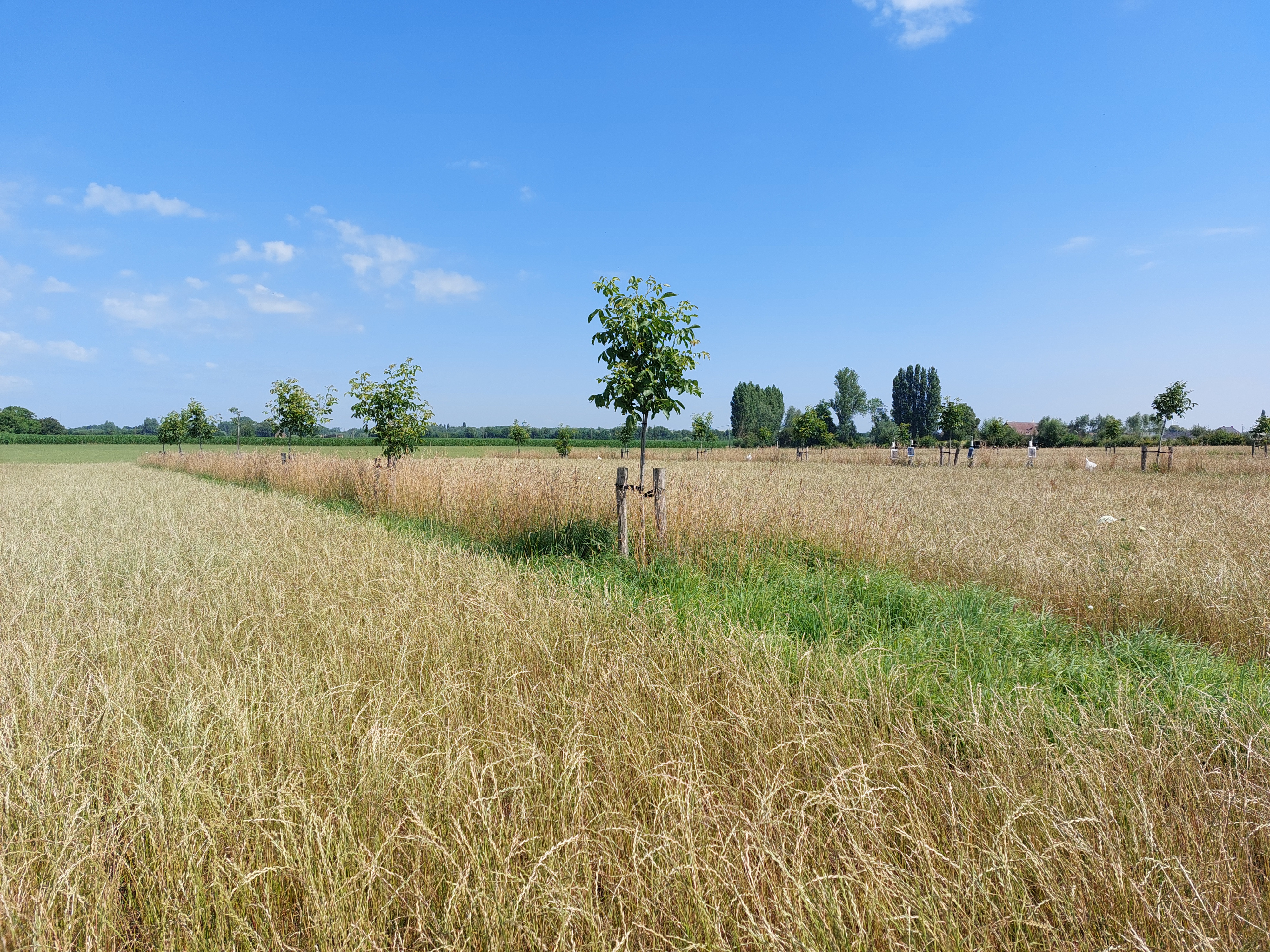
A second harvest followed in mid-July. Whereas the trees had not yet come into leaf before the first harvest in May, they had done so between the first and second harvests. However, we were still dealing with young trees with small crowns, and therefore did not expect any shadow impact on cultivation.
We were unable to substantiate this with harvest data. Due to the drought after the first harvest, combined with the inability to apply the necessary fertiliser due to the groundwork being carried out at that time, the development of the grass across the entire plot was substandard and not representative of the crop. The grass mainly formed ears and no samples were taken for DS yield. This harvest in July was also the last, after which the plot was prepared for the subsequent cultivation of winter grain.


Walnuts: maintenance awaiting production
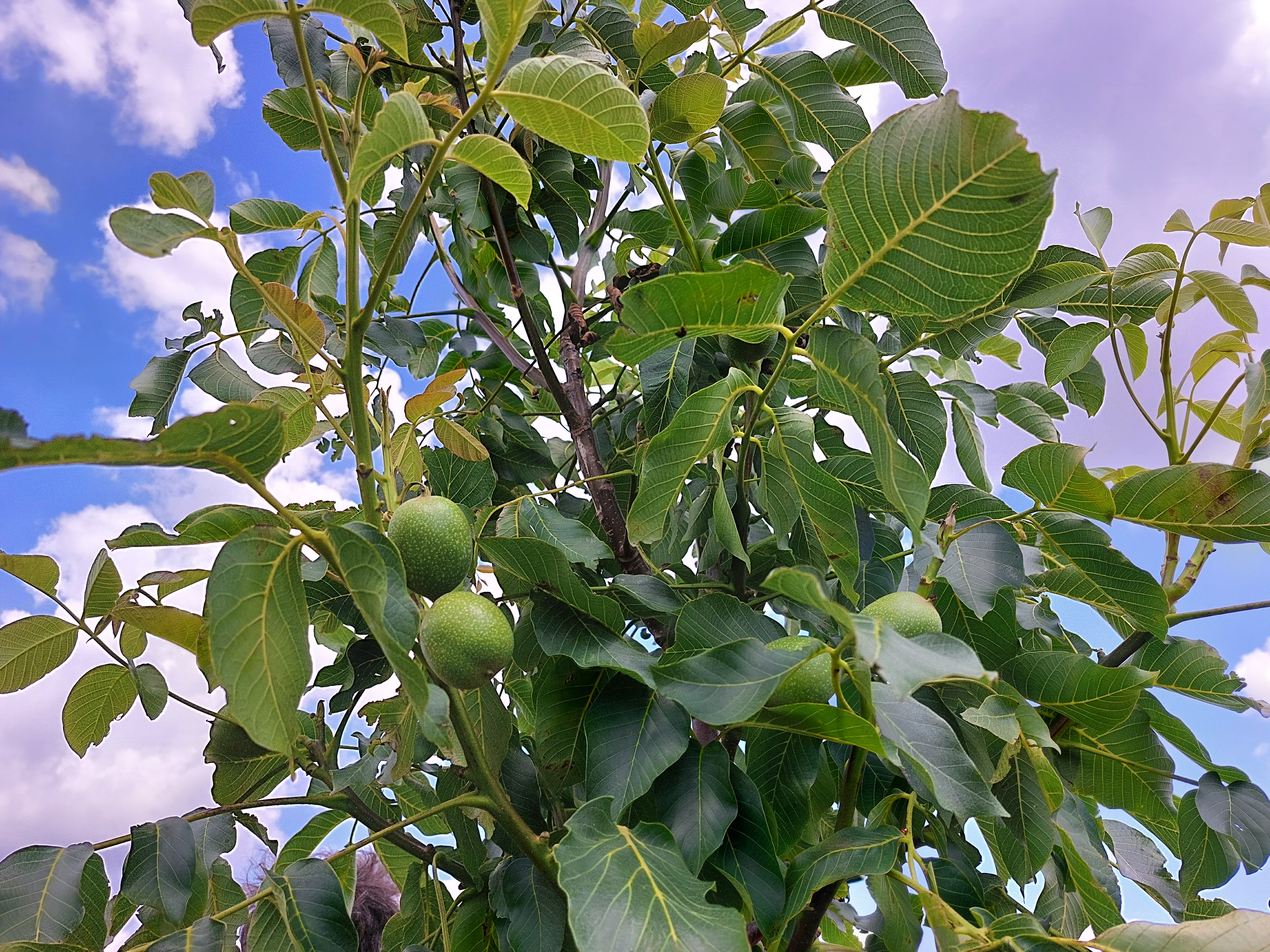
Healthy and productive nut trees are crucial to achieving a profitable agricultural system in the long term. That's why the trees are carefully monitored and cared for from the start. In the previous edition of Digging Deeper, you could read that two rows of trees will be replanted on beetle banks this winter. The other three rows of trees are doing well and are on track to produce their first nut harvest within a few years.
Spring maintenance
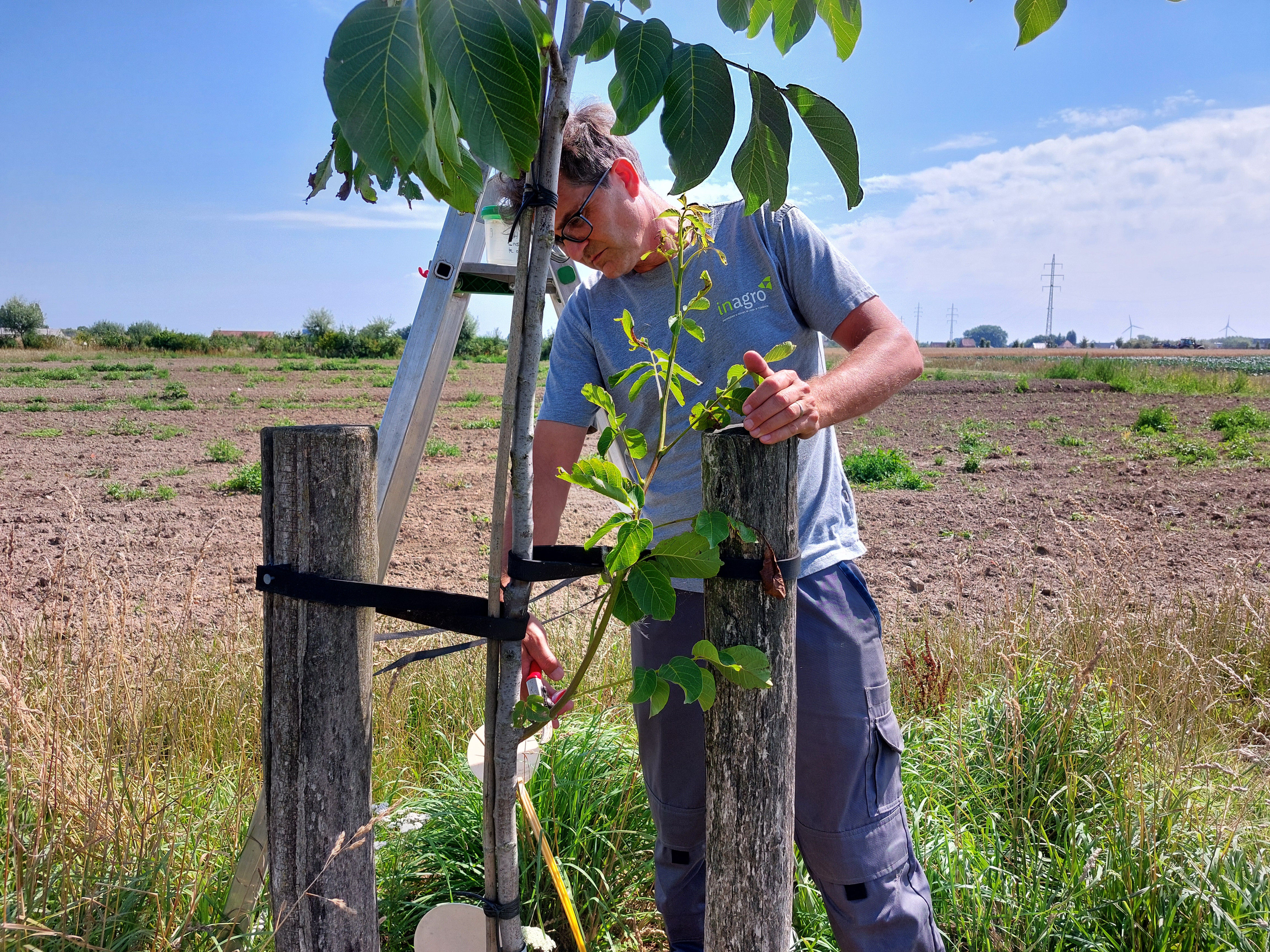
The tree bases, here a circle of approximately 1.2 m in diameter with the trunk as the centre point, were consistently kept weed-free by manual weeding.
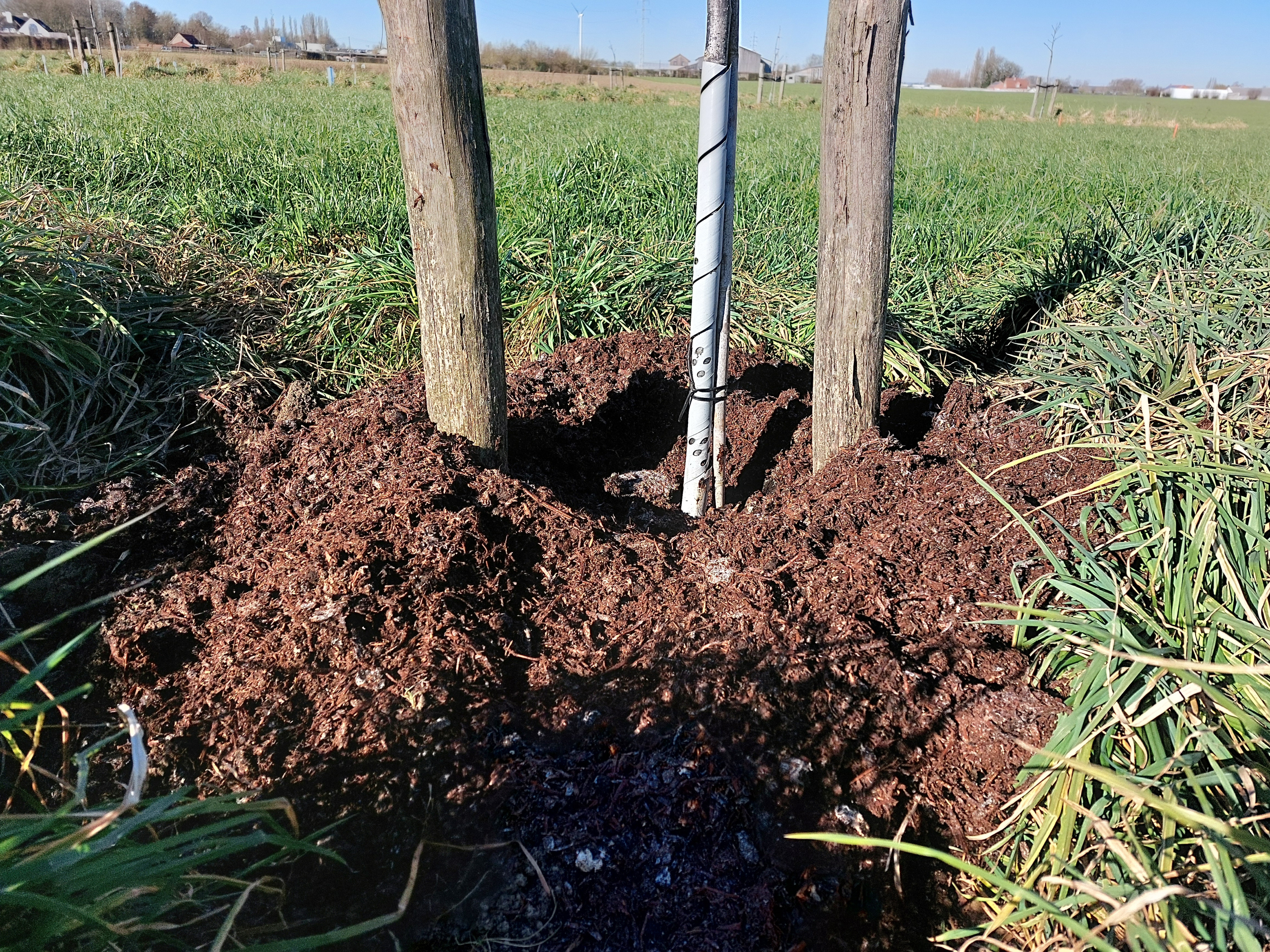
This spring (end of March), a new layer of champost (about 20 cm thick) was applied to the same tree bases as fertiliser and to limit the drying out of the soil around the relatively young roots. The previous layer of champost dated from the planting two years ago.
Despite the dry spring, the trees were not irrigated. The grass-covered tree strips and champost-covered tree bases remained moist for quite some time, and eventually a few welcome and well-timed rain showers provided the necessary water.

Pruning
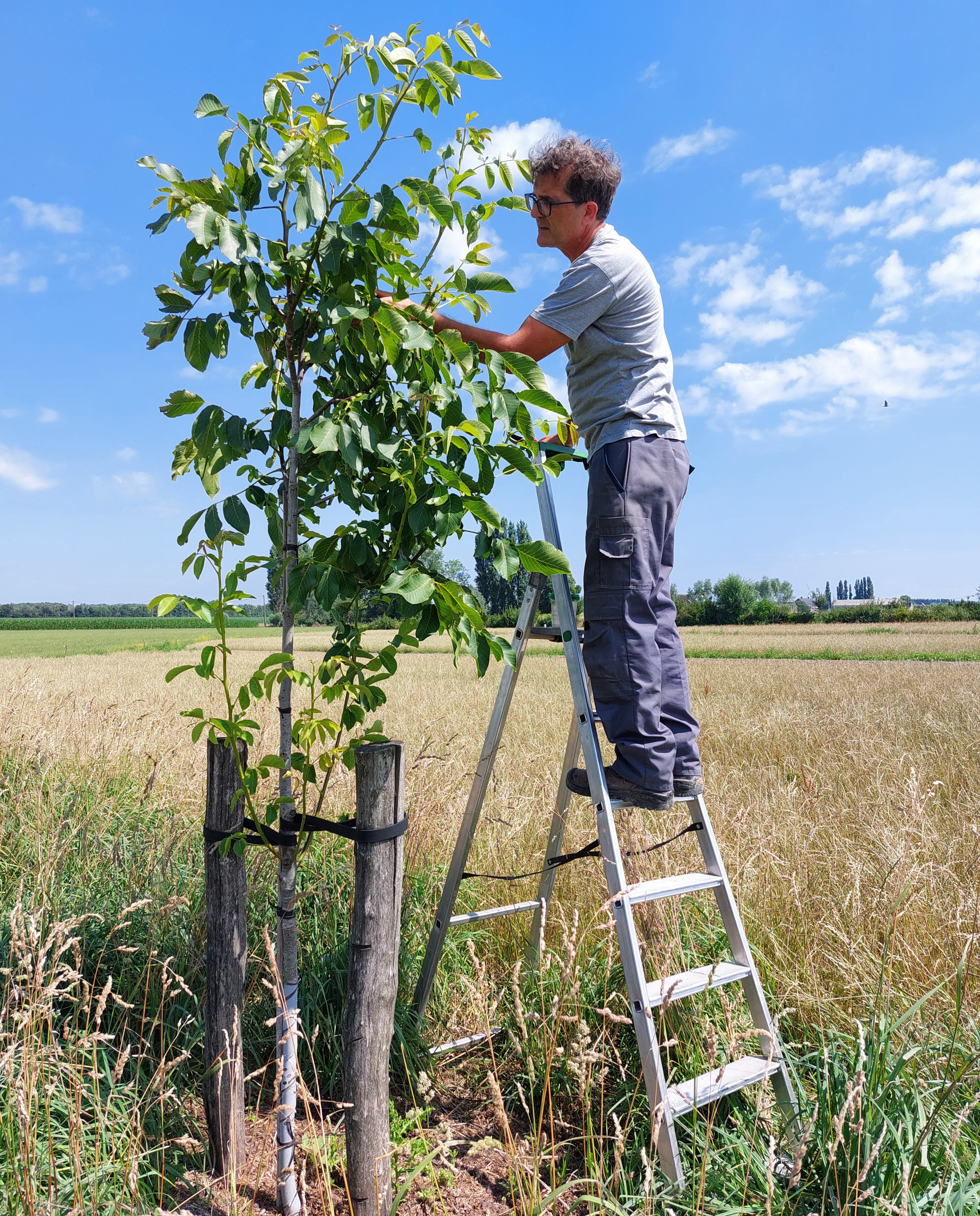
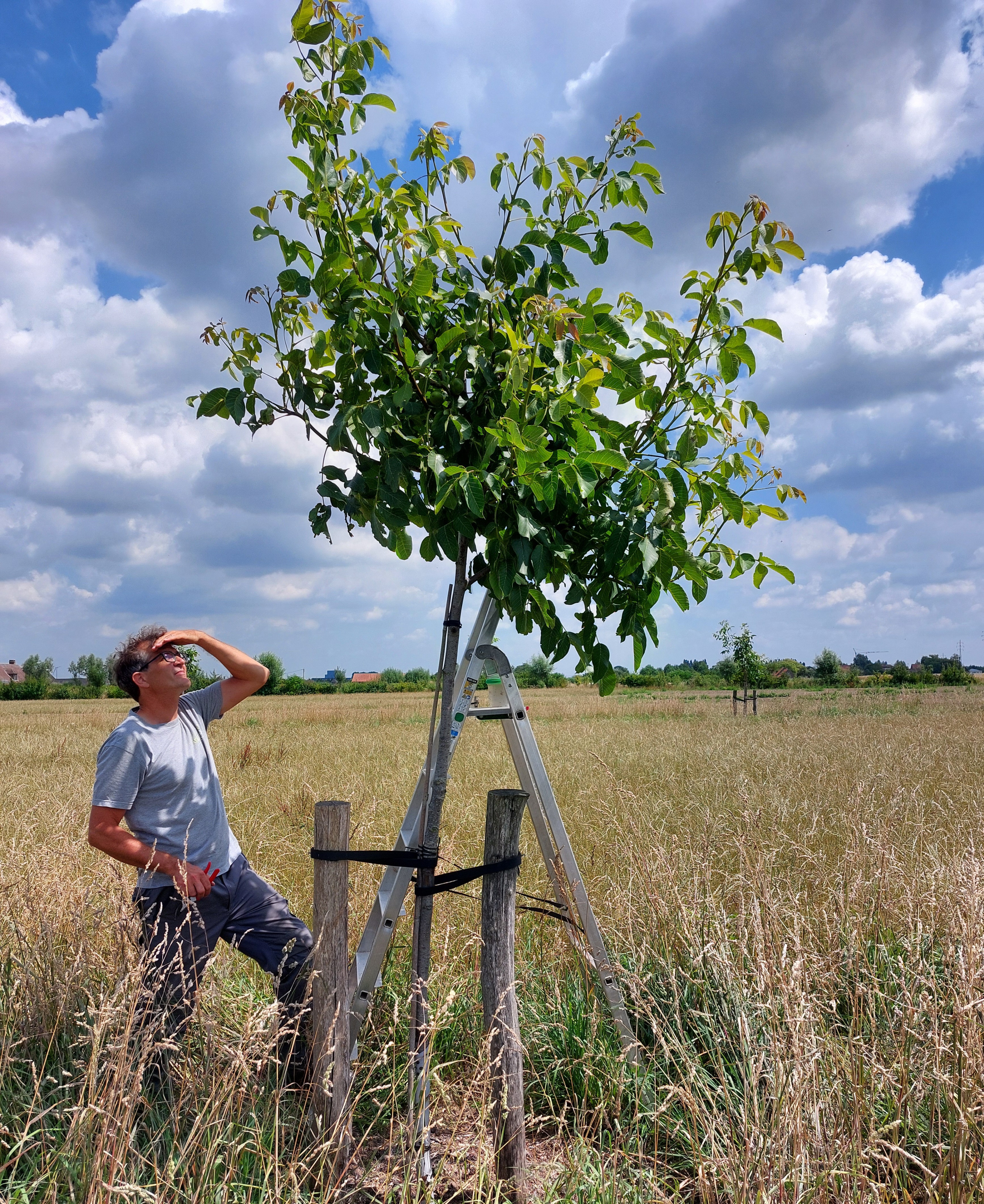
At the beginning of July, when the trees were in full leaf, pruning was carried out, just as it was last year. For most trees, this involved light pruning, with no more than 20% of the crown being removed. By doing this annually, you avoid having to take more drastic measures later on. Things we pay particular attention to at this stage:
- Creating a sufficiently long branch-free trunk so that the widening crown does not hinder field work later on.
- Removing root suckers and trunk shoots.
- Maintaining one dominant, vigorous top shoot. Where necessary, competing side shoots are removed (or topped), as are crossing branches.

Monitoring the sprouting and flowering of walnuts
Every year, we also monitor the sprouting of the leaves and the flowering of the walnuts for research purposes. The timing of sprouting teaches us more about the overlap of the leaf period between tree and crop and thus the possible (shadow) impact of the rows of trees on the intercrops. Knowing the flowering process can help us gain more insight into the fruiting and productivity of our trees later on.
Leaf sprouting
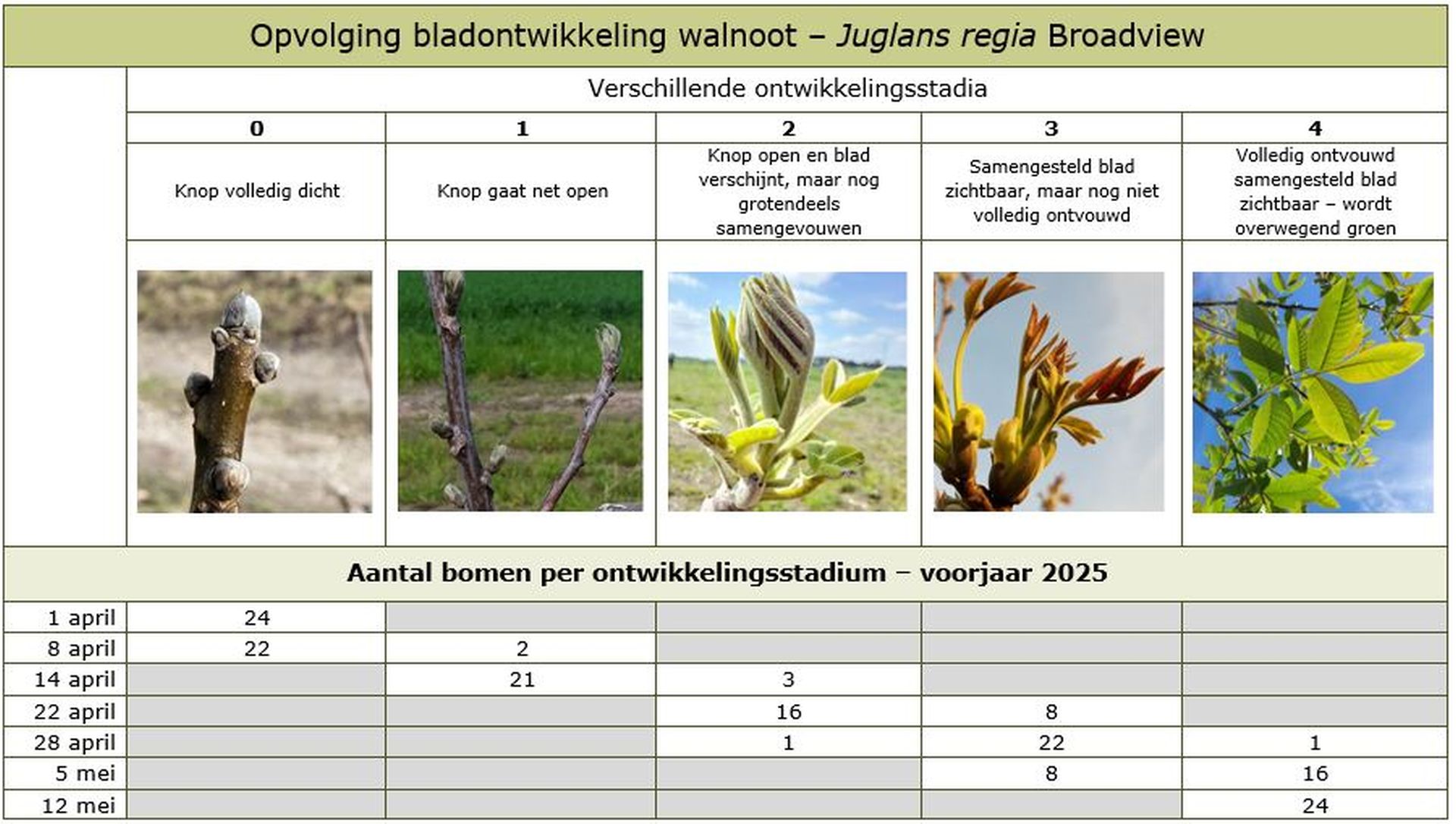
From the beginning of April, the walnut trees were monitored weekly for leaf development.
On 8 April, the first buds began to swell, and one week later, on 14 April, we saw the first buds actually sprouting. Another week later, most of the leaves were already sprouting. Another week later, most of the leaves were already sprouting, and by 5 May, two-thirds of the trees were in full leaf. By 12 May, this was the case for all trees. See also the table below.
The drier and warmer spring caused the leaves to develop slightly later but faster than the previous year. However, the differences are relatively limited. In 2024, we saw the first buds break open on 9 April, and it took until 16 May for all the trees to be in full leaf.

-
Table showing leaf development of walnut trees on the agroforestry plot – spring 2025
Male and female flowering
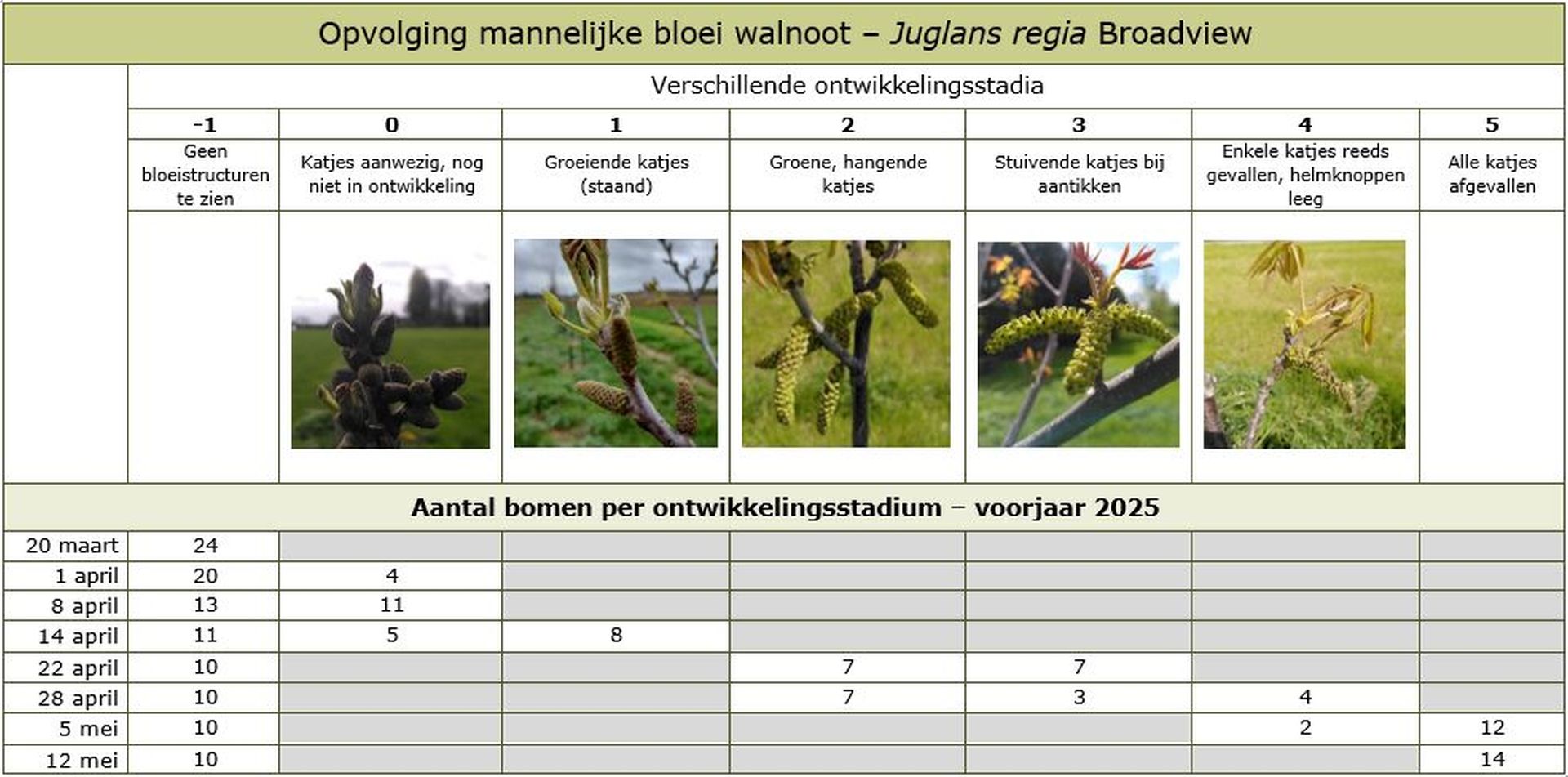
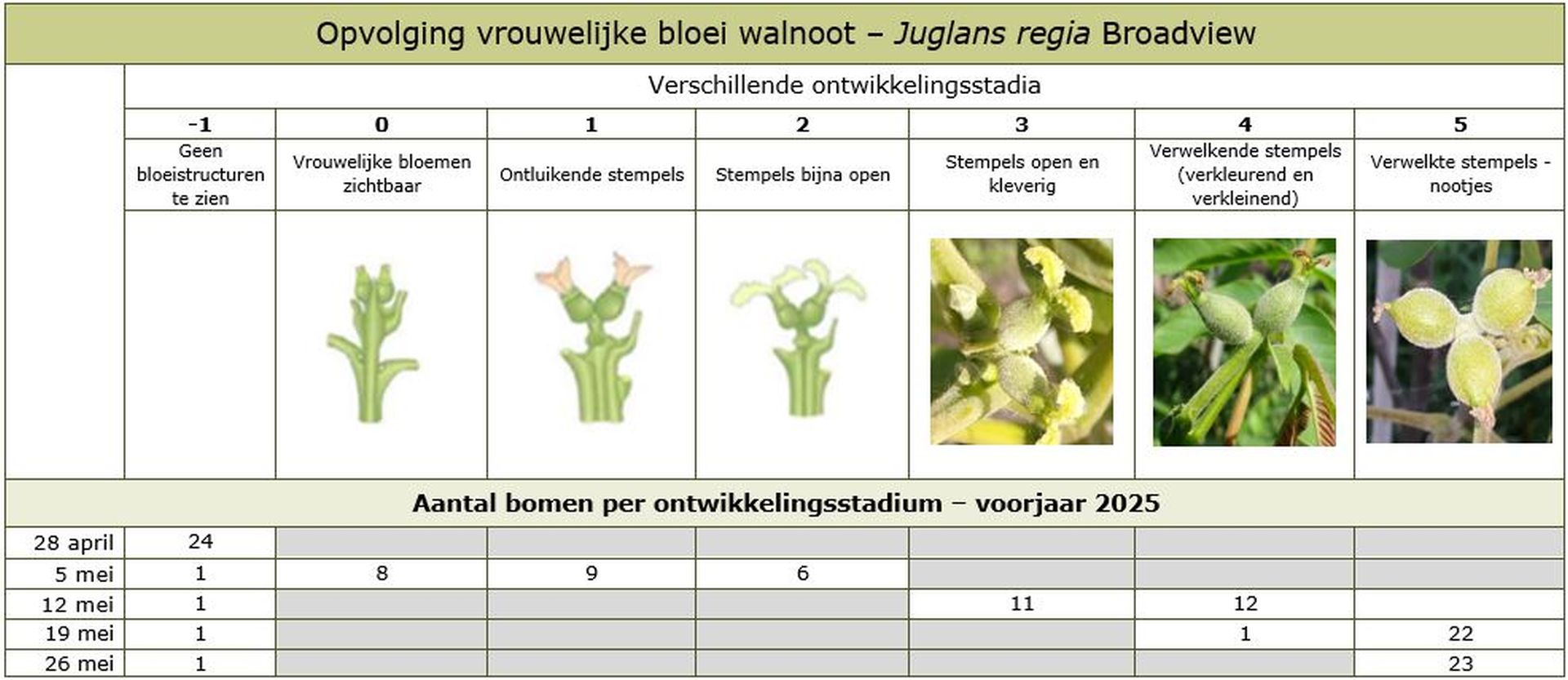
Walnuts are monoecious and bear male and female flowers on the same tree. In the Broadview variety used here, male flowering starts earlier than female flowering. On our plot, we saw male flowering start on 14 April and end on 12 May this year, while female flowering took place between 5 May and 26 May. See also the tables below. Due to the lack of overlap in flowering periods, self-pollination or cross-pollination is not possible here. However, Broadview is known to be capable of fruit set via apomixis (seed formation without fertilisation), which makes this variety particularly interesting.
A comparison with last year is difficult, as our trees only flowered in greater numbers this year. However, by continuing to monitor flowering in the coming years, we hope to gain more insight into the impact of the weather and changing climate on the flowering behaviour of our walnuts.

-
Table showing the development of male flowering of walnut trees on the agroforestry plot – spring 2025
-
Table showing the development of female flowering of walnut trees on the agroforestry plot – spring 2025
Four more years! - Pro-Noot
Good news! We will continue to focus on nut cultivation in the coming years and will be able to further develop and share our experience and knowledge with Flemish growers. On 1 January, the VLAIO project Pro-Noot was launched, led by ILVO and with Inagro, PC Fruit and Praktijkpunt Landbouw Vlaams-Brabant as partners. Over the next four years, this project will focus on professionalising nut cultivation in Flanders (with a focus on walnuts and hazelnuts), raising its profile and tackling current challenges through practical research. We will do this by:
- Increasing technical knowledge of cultivation
- Developing an IPM strategy for nut cultivation
- Providing best practices: from harvest to processing and storage
- Addressing pain points in the nut chain.

Tree strips: maintenance and flowering remain challenging
The tree strips now consist mainly of grass clumps. Flowering herbs are only found sporadically. During the fertilisation of the intercrop, the tree strip was not always protected, which encouraged grass growth. Overseeding with perennial herbs last autumn has resulted in little flowering.
Nevertheless, these grass strips are still an ideal habitat for a lot of soil life and insects, including pest-controlling ground beetles.

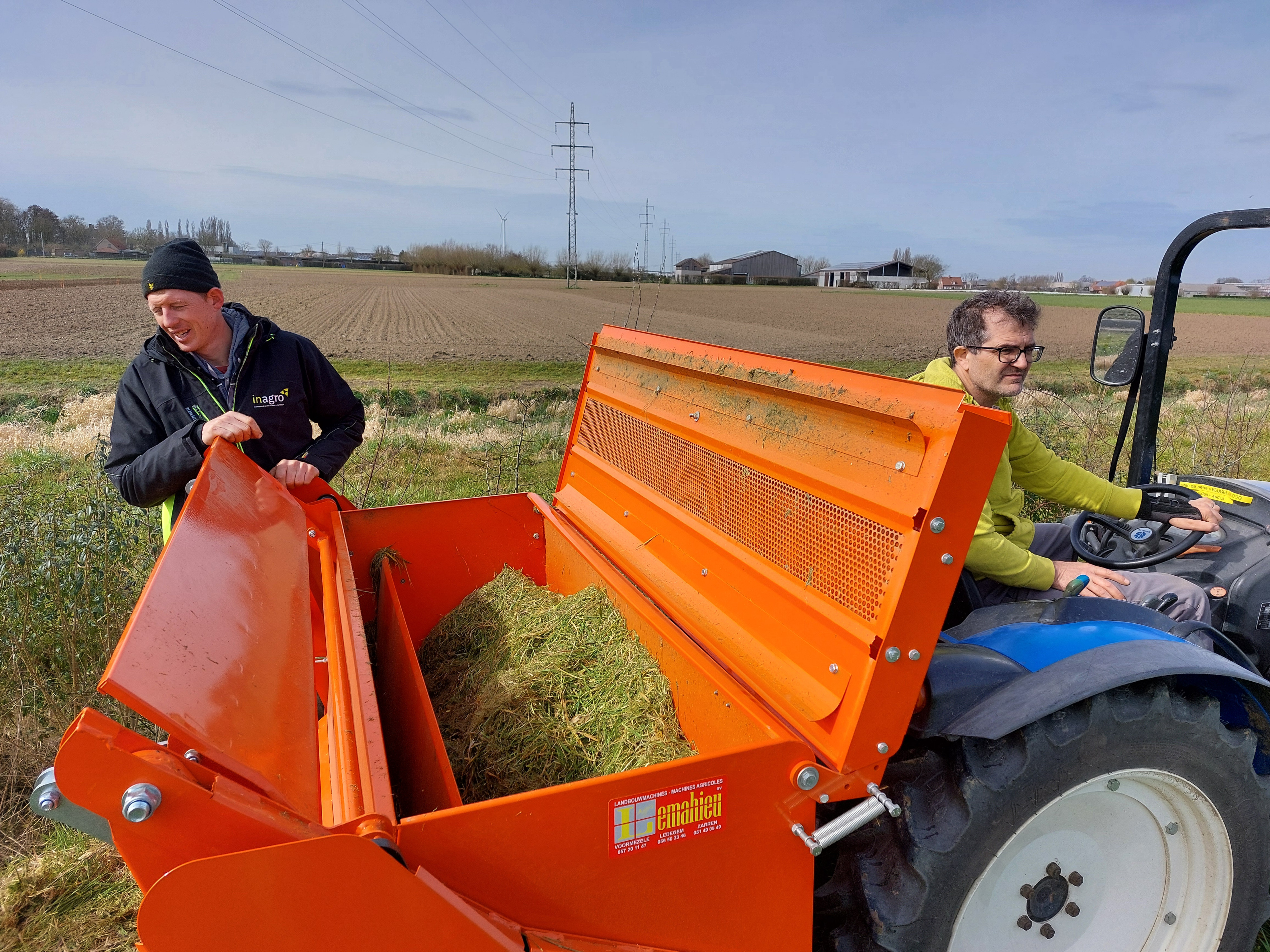
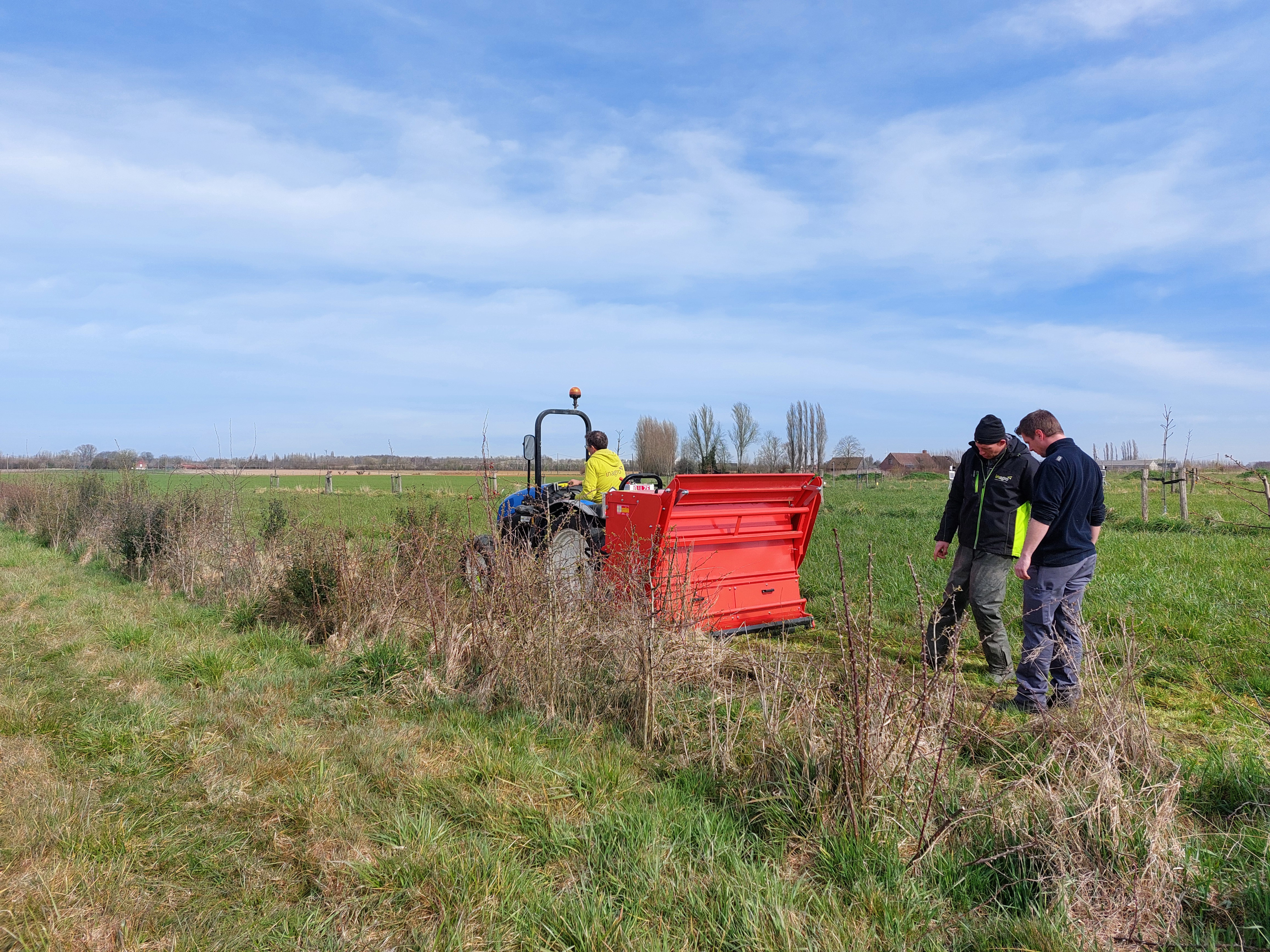
One point of attention is that the grass clumps that form do not make mowing the tree strips any easier. An attempt this spring with a flail mower with collection was unsuccessful (see photo). The cutting height of this flail mower could not be adjusted sufficiently, causing too much damage to the grass clumps, and the long clippings were not properly removed.
In the end, the tree strips were mowed with a brush cutter in mid-April. Two of the three tree strips were mowed, while one was left unmowed. At the start of summer, we saw hardly any difference between the mowed and unmowed tree strips.

The hedge seems to have completely taken off
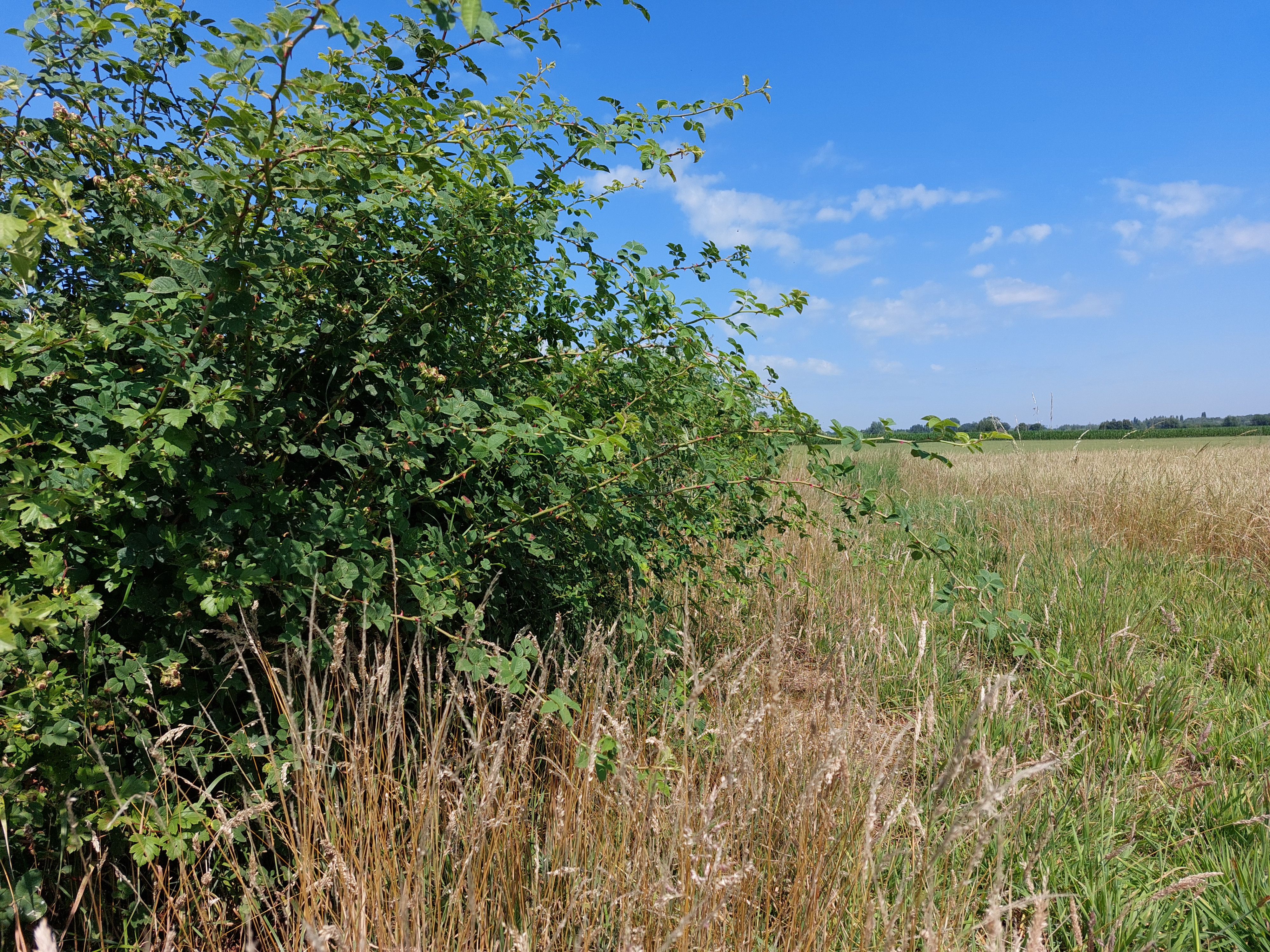
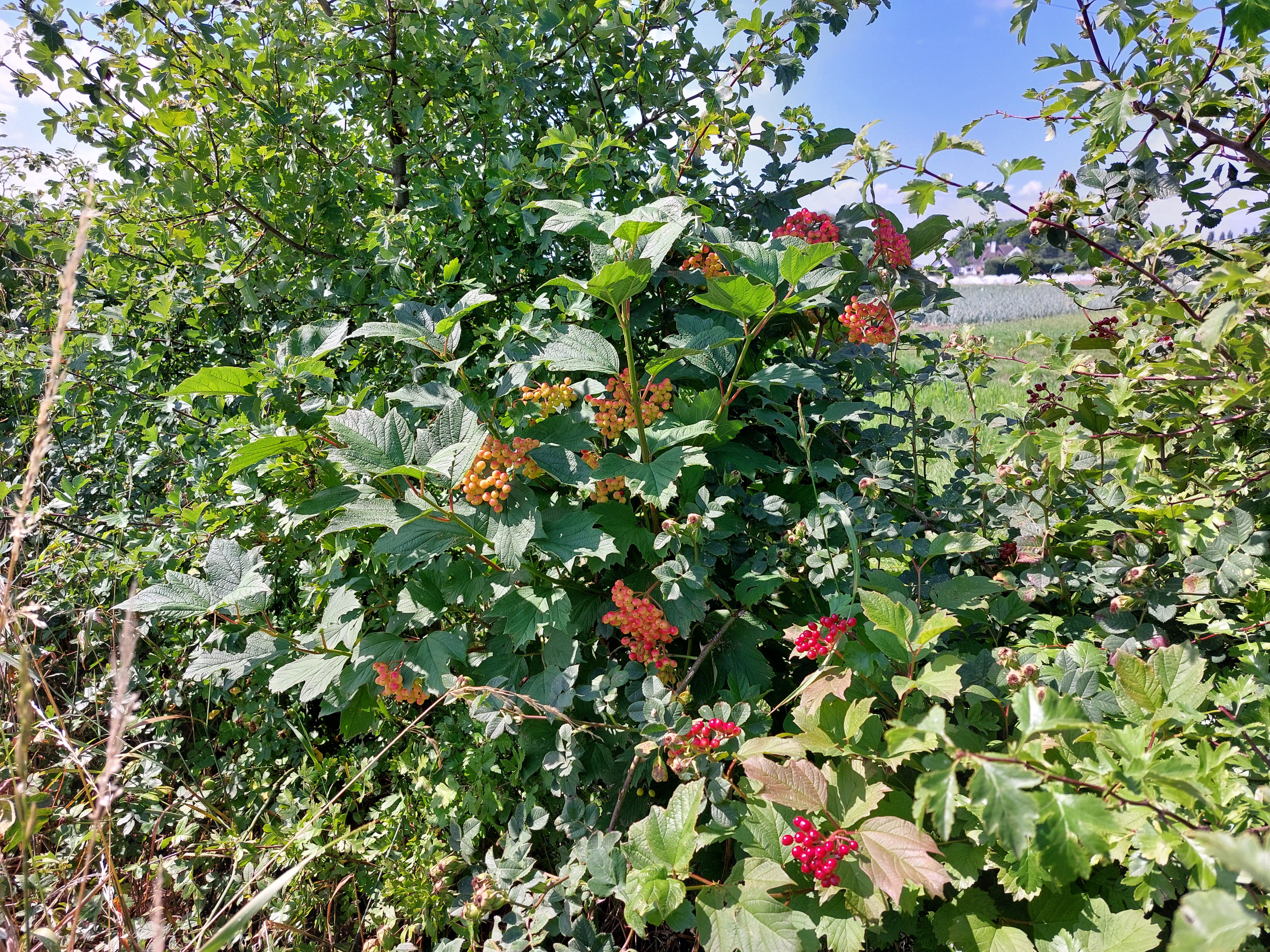
The hedge along the plot serves a dual purpose: on the one hand it acts as a windbreak and on the other it provides a habitat for many useful insects and farmland birds (choice for berry-bearing shrubs), with a focus on partridges. The hedge has grown considerably in volume and we have often spotted pairs of partridges in and along the hedge.
Maintenance remained rather limited for the time being. The hawthorn has already been cut back somewhat and the rose species in the hedge tended to form runners in the crop, which we had to prune away in good time. The grass strip along the hedge provided a useful buffer and also seems to be attractive to wildlife. Like the tree strips, this grass strip was mowed in early spring (before the breeding season).

Time is money
It's clear that quite a bit of maintenance work was done this spring. Although the time investment and associated costs depend heavily on the specific situation of the business and plot, we have provided a rough estimate for this plot. In total, maintenance took 16 hours this spring, which corresponds to labour costs of approximately 800 euros, or about 570 euros per hectare. Half of this was taken up by the maintenance of the tree strips. A less labour-intensive way of maintaining these is desirable.
TIP! As afarmer, you can apply for an annual maintenance subsidy of 270 euros/ha.

IN THE PICTURE: the plot and activities since the previous edition of 'digging deeper'