
Digging Deeper: (ground)work to do!

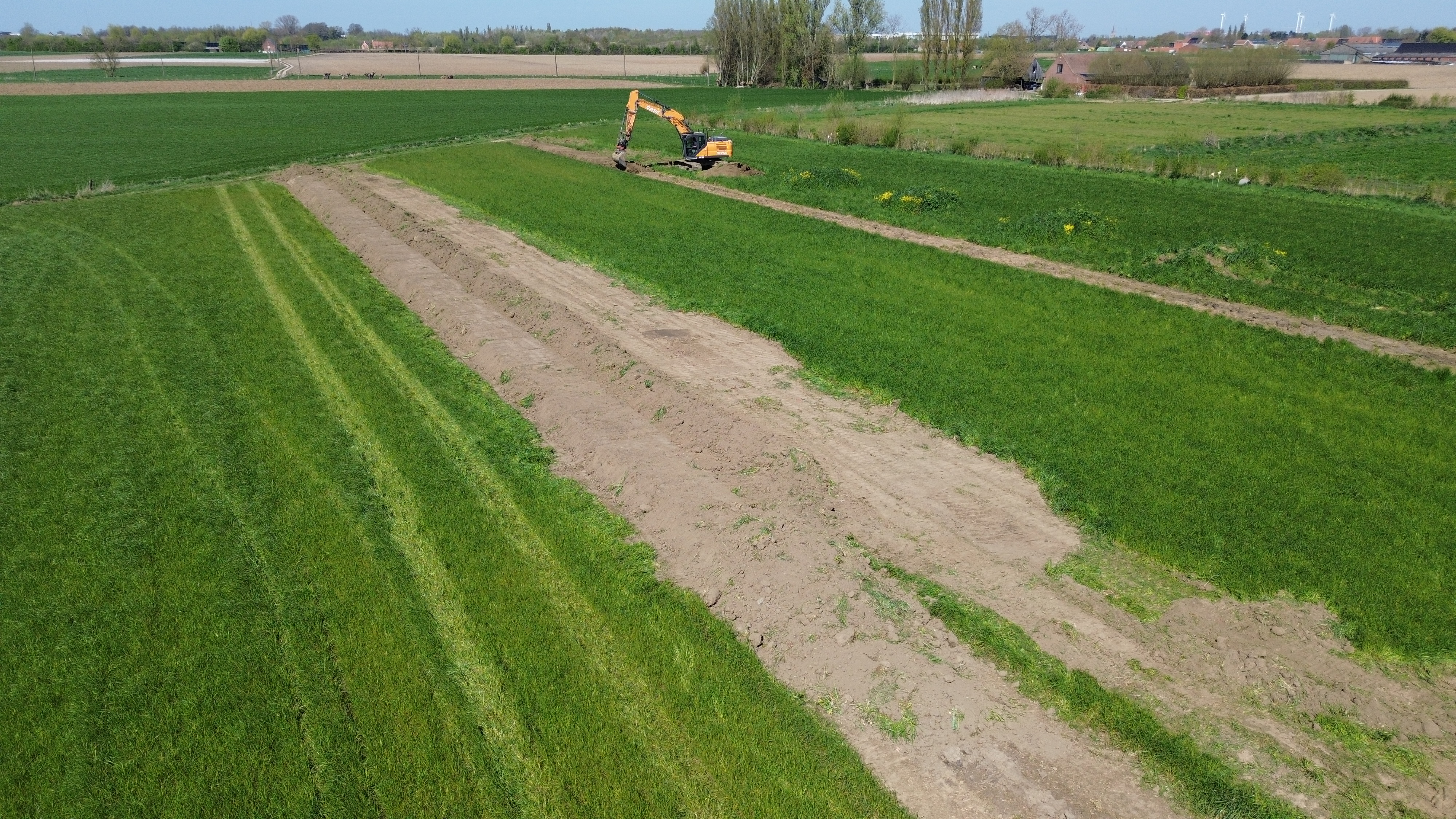
In the series 'Digging Deeper' you can follow the developments and results of Inagro's own agroforestry plot from the front row. In this edition you can more about the groundworks carried out, including the construction of the beetle banks on which two rows of walnuts will be planted next winter.
Water forces intervention
Earlier you could read about the water management problems on our agroforestry plot. Stagnant water on one side of the plot during the past two wet winters (pictured right), caused a lot of loss of the nut trees and two rows have to be replanted.
While agroforestry is a soil-improving agricultural practice that may just remedy this problem in the long term, our trees required short-term intervention. This spring was therefore dominated by the implementation of the following works:
- Renewal of the grass buffer strip along the stream to promote drainage of the plot.
- Construction of beetle banks on which the two new rows of walnut trees will be planted.

Underground signs of water problems too
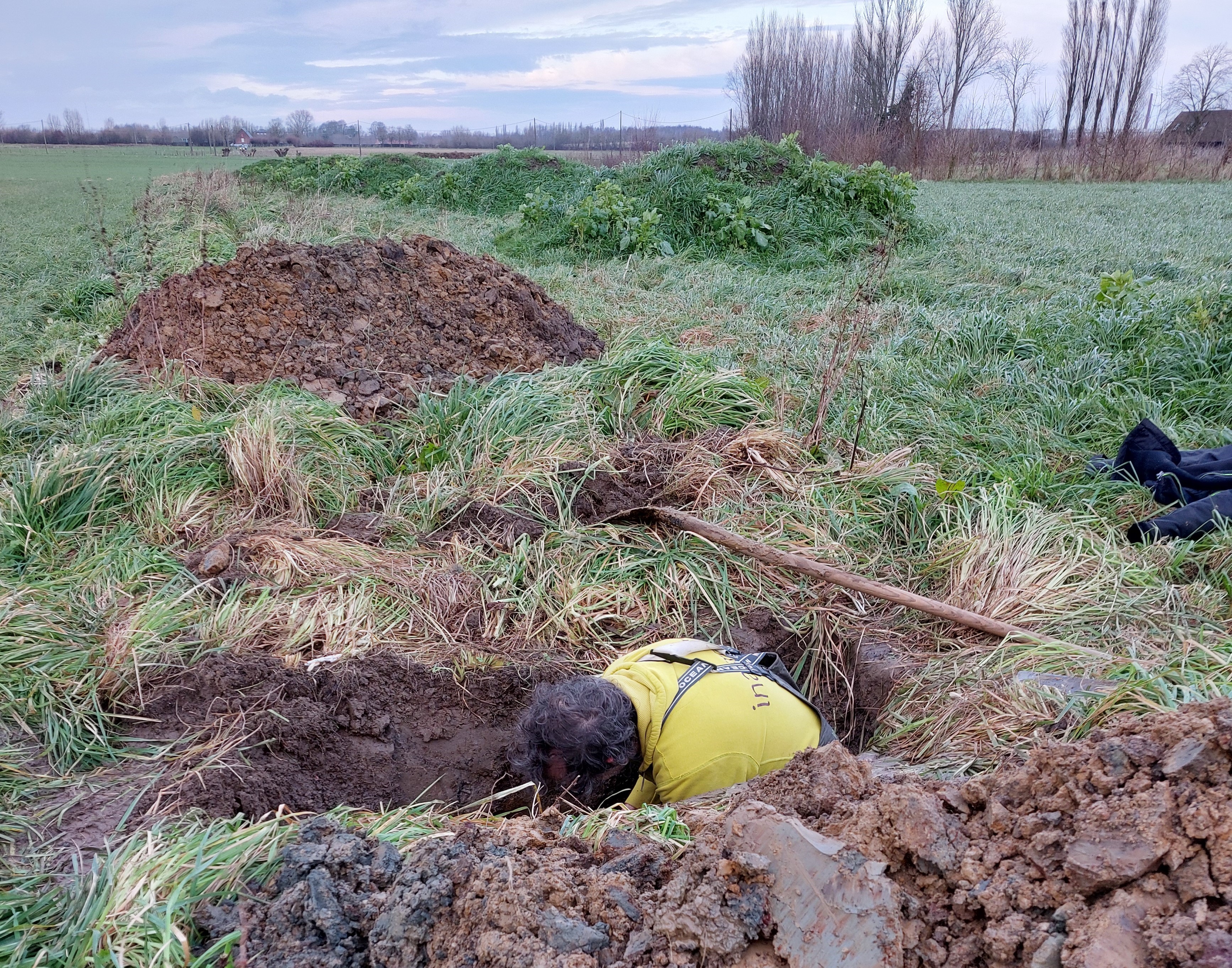
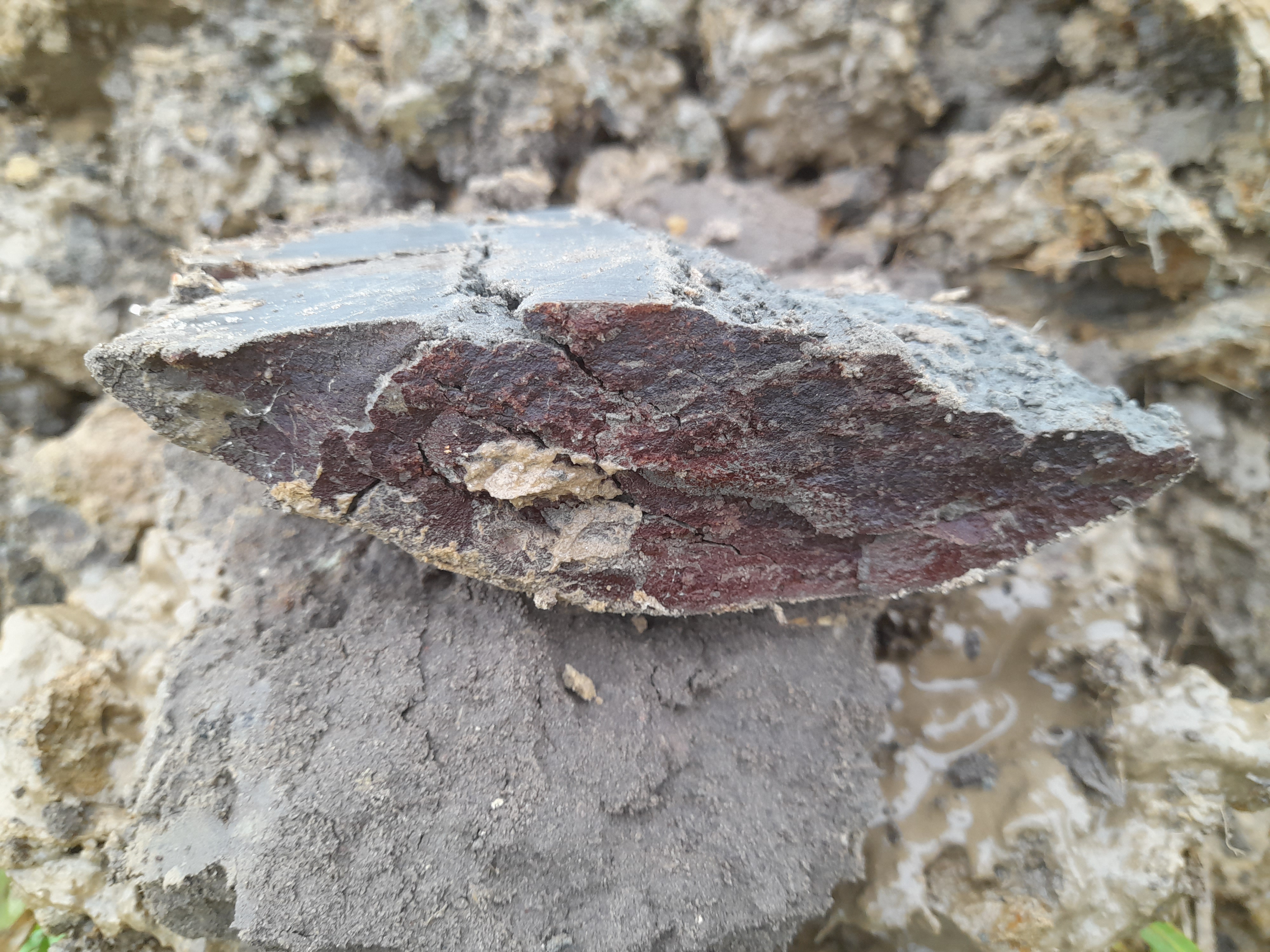
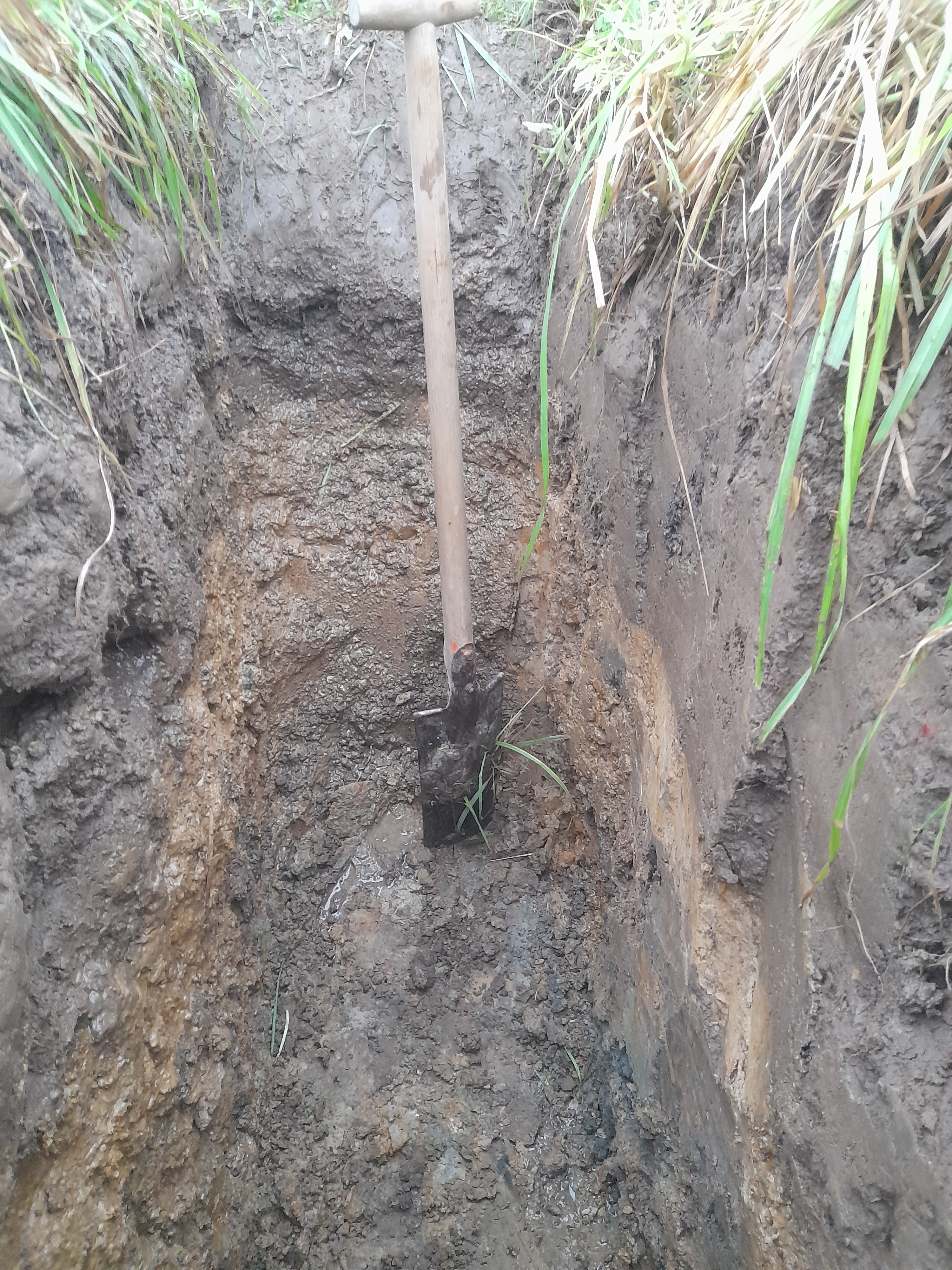
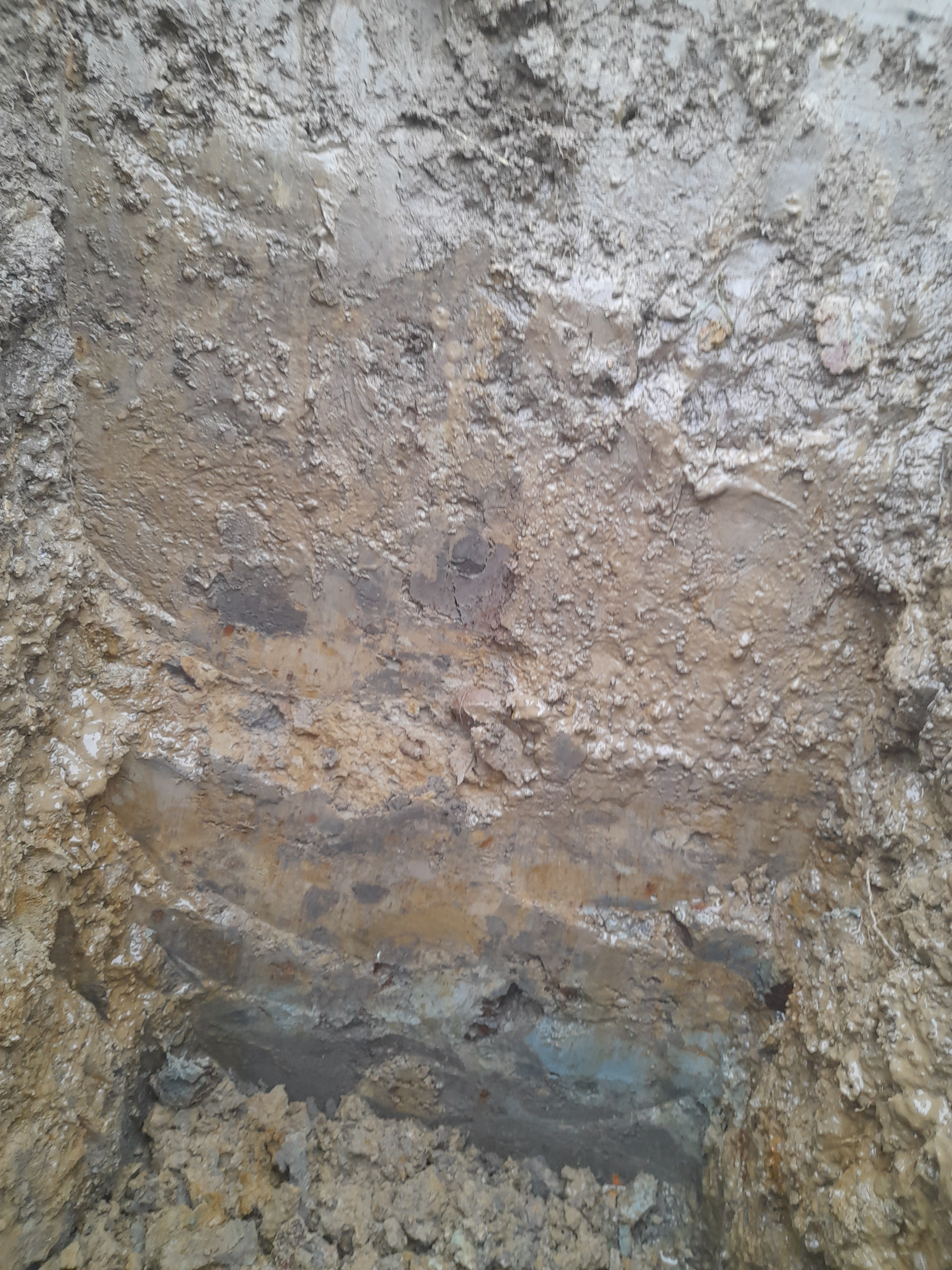
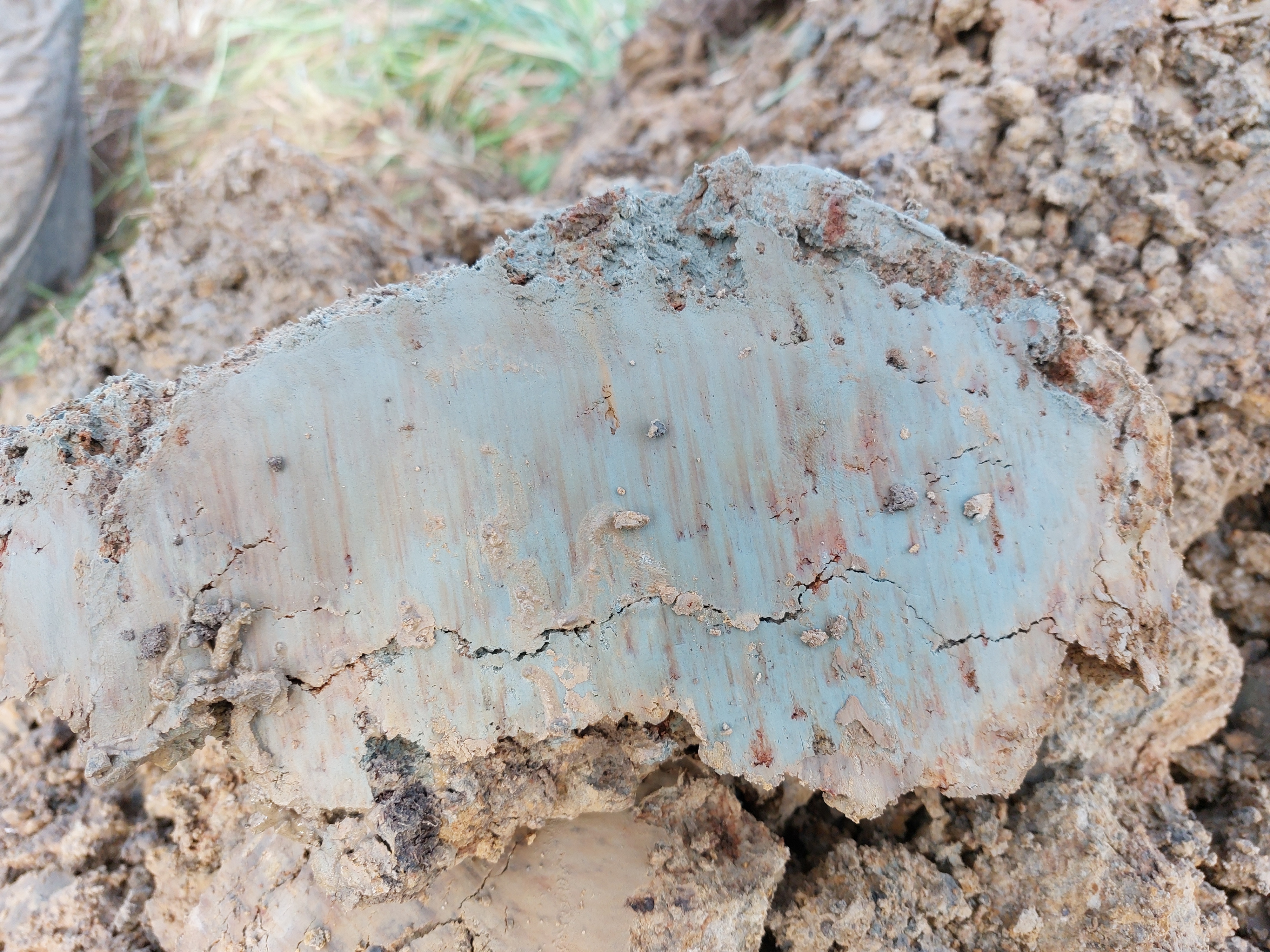
When digging some profile pits in the most wet areas of the plot, the gleyy soil (rust spots) also indicated highly variable soil moisture conditions throughout the year. Possibly the rust spots here arise from the presence of stagnant water above a poorly permeable layer in the soil profile.
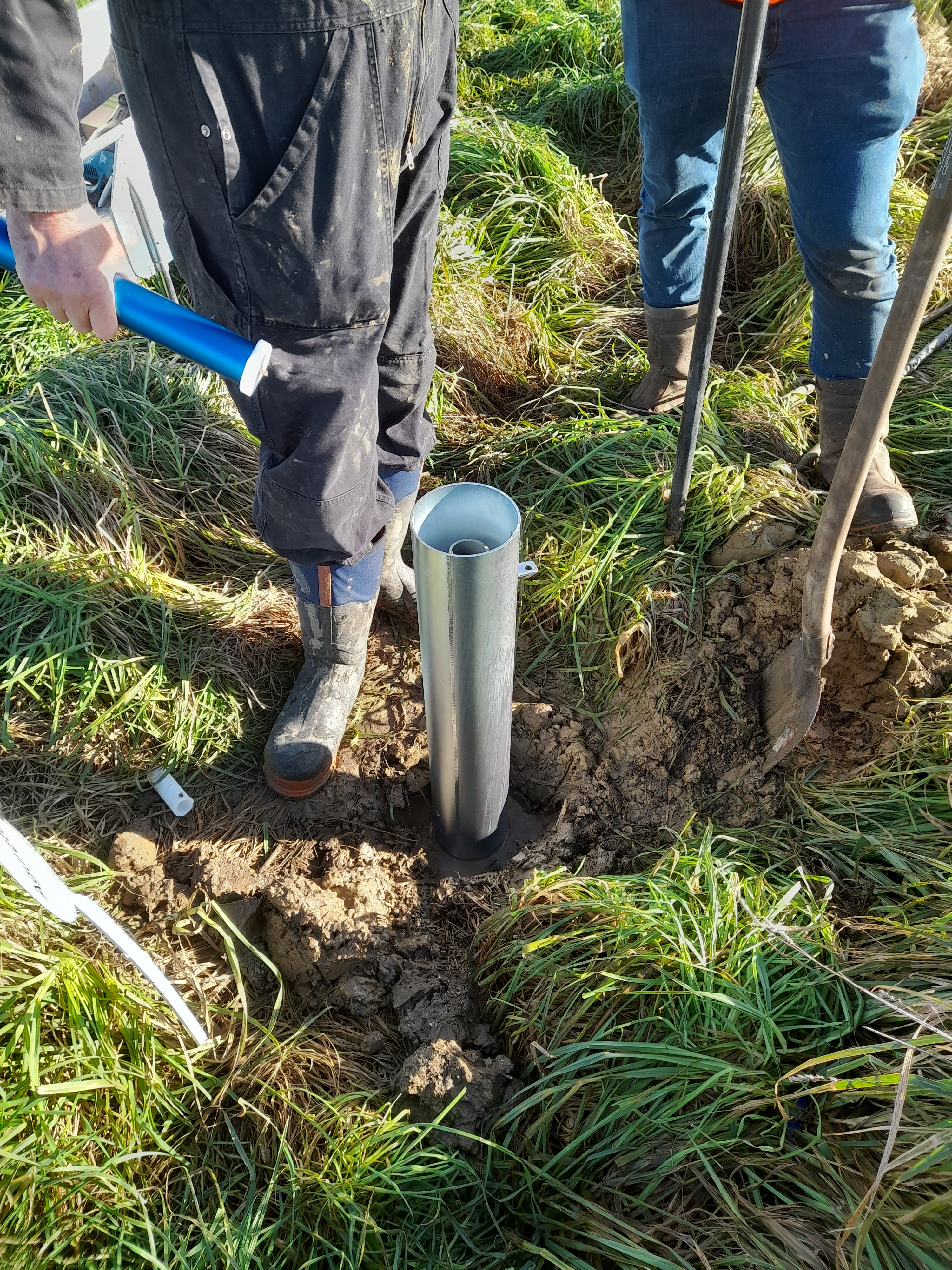
Last spring, we placed two groundwater monitoring pipes (type piezometer, TD-Diver water level logger, Royal Eijkelkamp) on the plot to monitor the groundwater level and groundwater pressure. Together with the many soil moisture sensors, in the future these will help us better understand the water balance on the plot and teach us how the trees affect it.

Ground works finally started
Last summer, plans were made and the necessary permit applied for. When winter set in, the permit was obtained, but the works still had to be postponed due to wet conditions. As a result, the new rows of trees cannot be planted until next winter. Although this spring's drought caused particular concern, it did ensure that we could finally start the ground works in early April in ideal soil conditions.
1. Renewal of grass buffer strip
Along the creek is a 6-metre wide grass buffer strip. Changes to the plot over the years, accumulation of runoff and the development of vegetation on the buffer strips caused the buffer strip to rise slightly higher in relation to the plot. Consequently, excess runoff water (also from surrounding plots) stagnated on the agroforestry plot during periods of heavy rainfall.
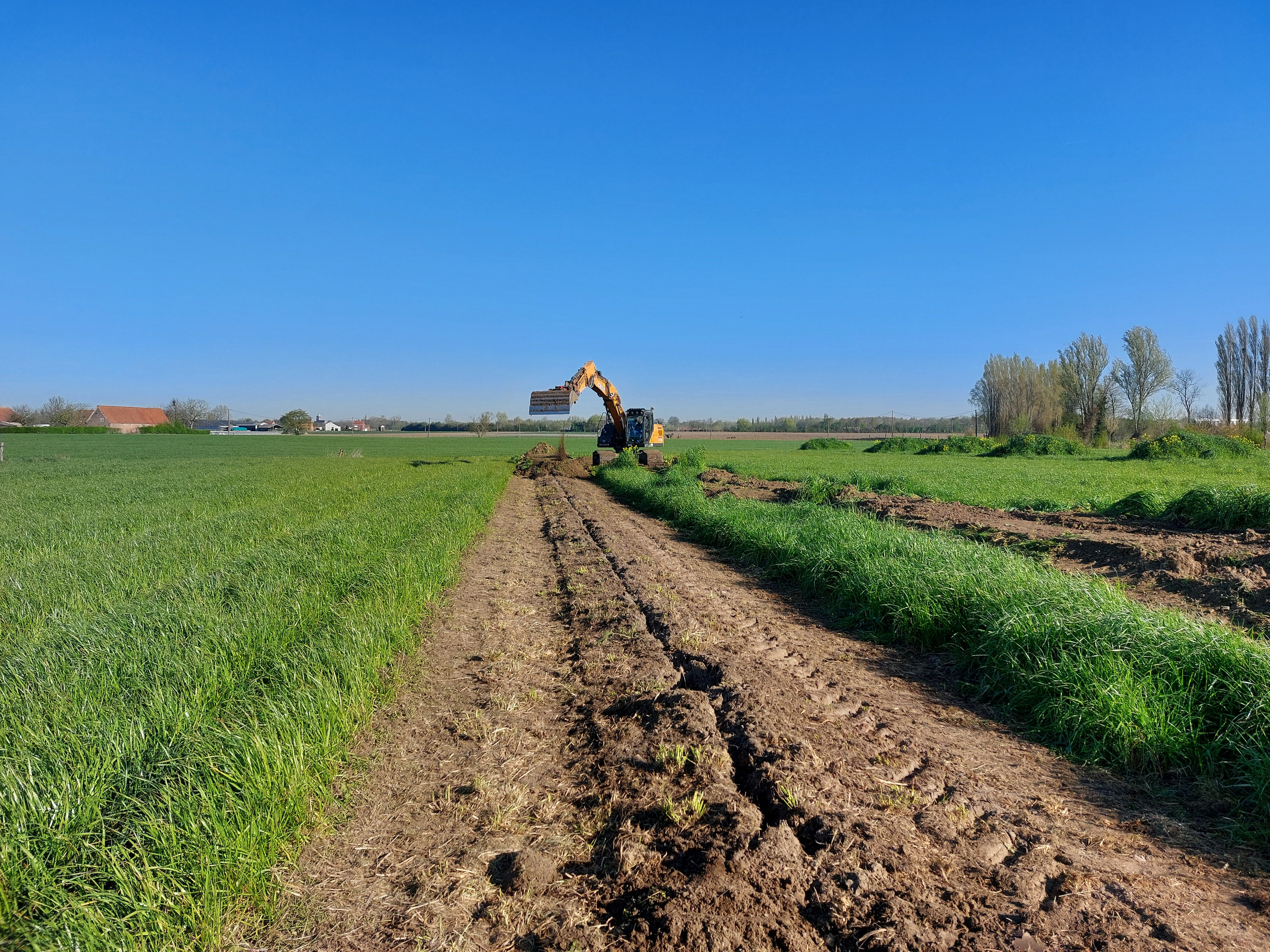
Using a crane, the grass buffer strip was partially excavated for better drainage and will soon be re-seeded with a grass-herb mixture.

2. Construction of beetle banks
Next winter, the two new rows of walnuts will be planted on beetle banks. These raised strips are a suitable overwintering habitat for many plague-fighting insects. By planting the walnuts on these beetle banks, you also prevent them from getting their feet in the water during wet periods. The fact that the vegetation of a beetle bank requires little or no management is a plus for the use of the tree strip.

While waiting for the trees to be planted, we started work on the construction of the beetle banks.
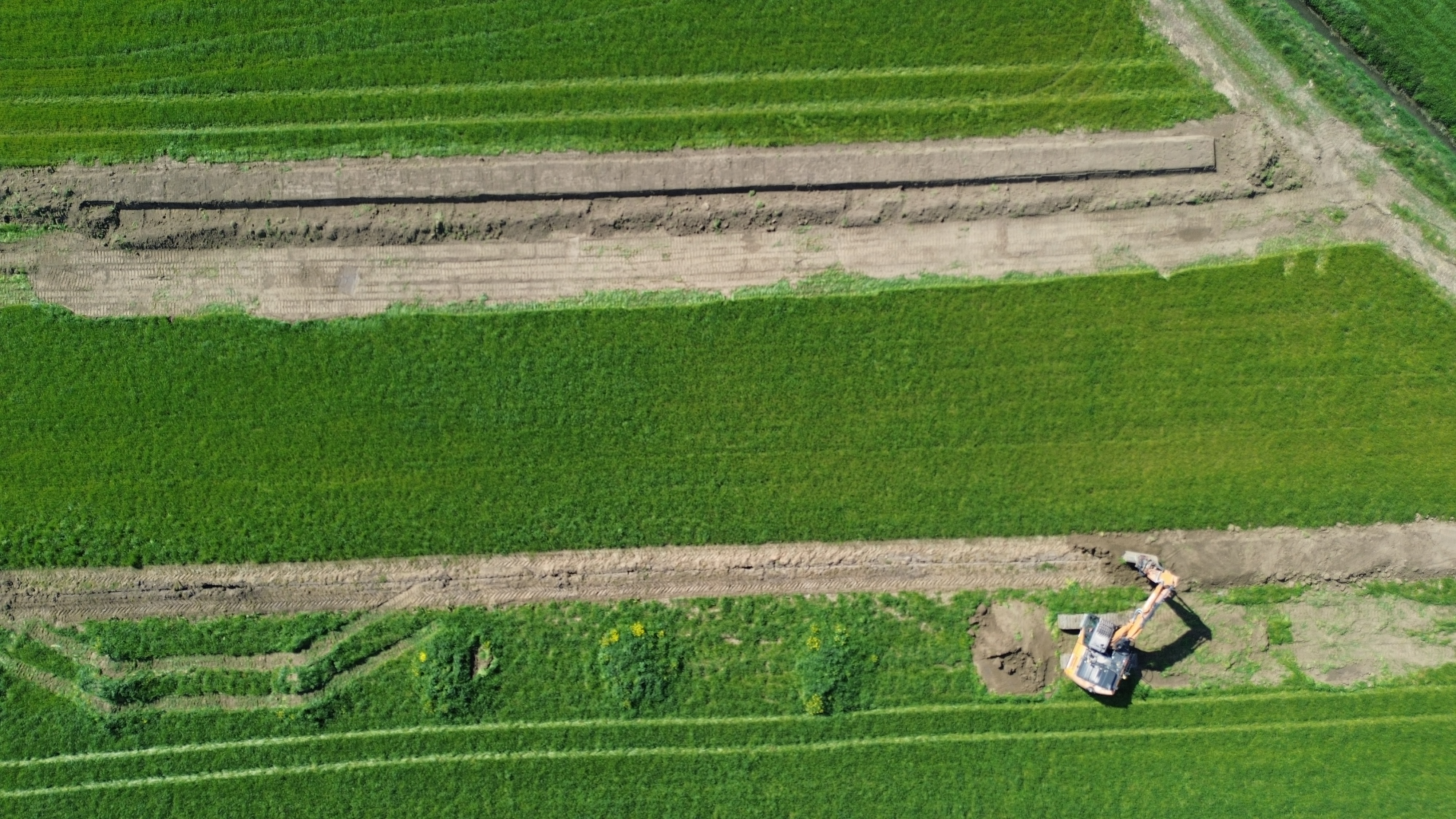
Before raising the beetle banks, the corresponding tree strips were first dug down to a depth of +- 80 cm. This breaking through deeper compact layers promotes root growth of the nut trees in depth and increases water infiltration into the tree strip.
Digging a profile pit (see earlier) can help detect compacted layers and ascertain whether deep cultivation is needed. Even without constructing a beetle bank, deep flushing of the tree strip before planting the trees is often recommended.

Crane or plough
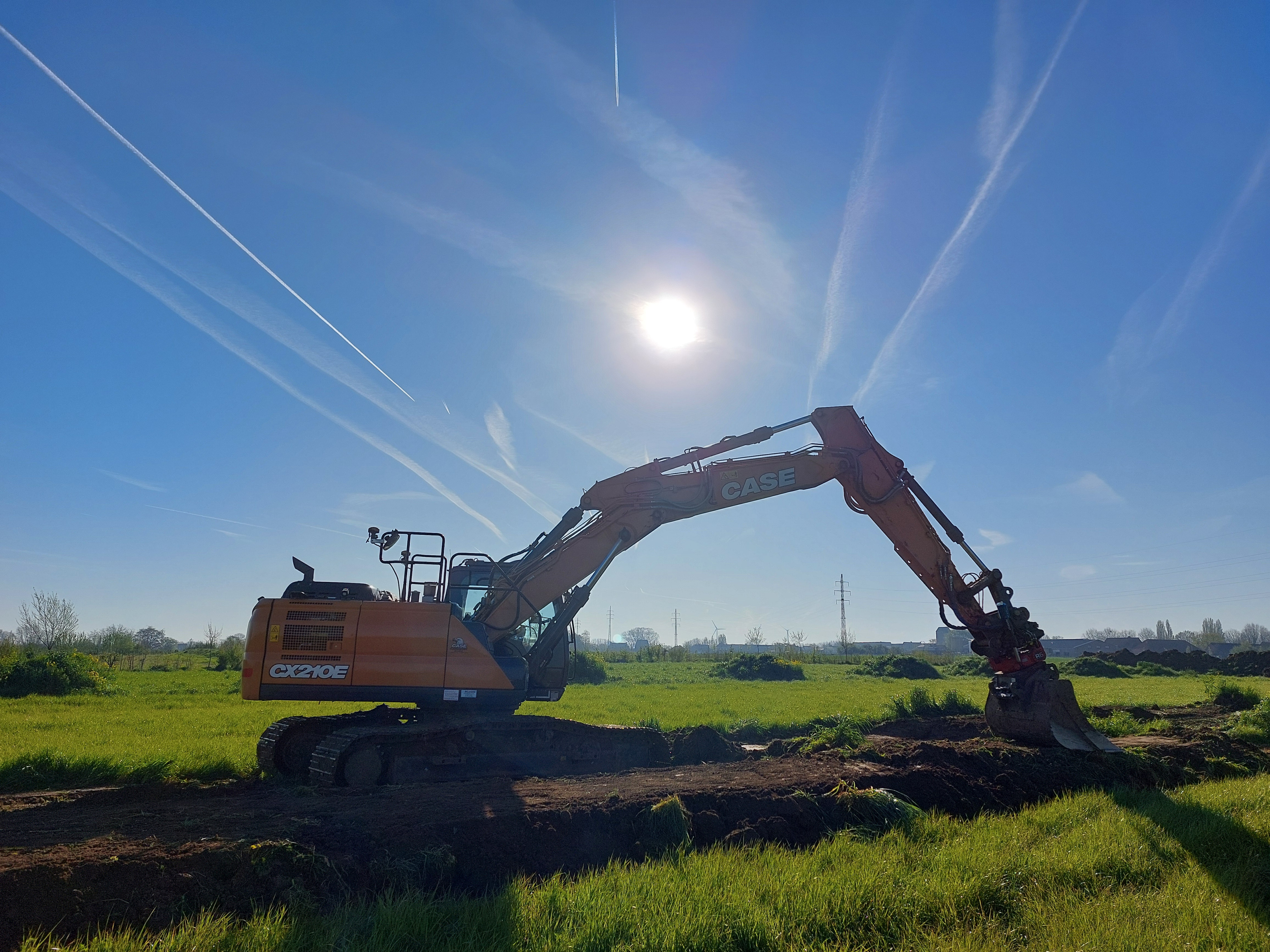
The earth for raising the two beetle banks came from the excavated buffer strip (and partly from the earlier construction of a water basin). The same crane was immediately used to construct the beetle banks.
A beetle bank can also be laid quite easily with the plough, without any supply of soil. The advantage of this is that the construction is a lot less labour-intensive compared to a crane. The advantage of a crane, on the other hand, is that the raised soil can be pushed in immediately and the beetle bank settles less afterwards. When laying with a plough, it is best to take into account that the height can almost halve after a few months.

Shape and dimensions
The beetle banks were constructed by an agile crane operator in a trapezoidal shape 50 cm high and 2m wide. After settling in the earth and planned machining, we expect the beetle banks to finally be about 40 cm high.
Although the tree lanes here are 3m wide, the beetle bank was deliberately made only 2m wide. Experience shows that beetle banks eventually widen slightly in the years after construction due to the crumbling sides resulting from the machining operations. Therefore, when constructed, the beetle bank is best slightly narrower than the foreseen width of the tree strip. A margin of 50 cm was taken into account on both sides here. This ensures that the calving soil of the beetle bank does not end up in the interplant zone.

Preparation for sowing
At the end of this summer, the beetle banks will be sown with a specific beetle bank mixture (see below). Until then, they will be kept fallow. Several repeated mechanical weed treatments exhaust the weeds as much as possible before sowing.
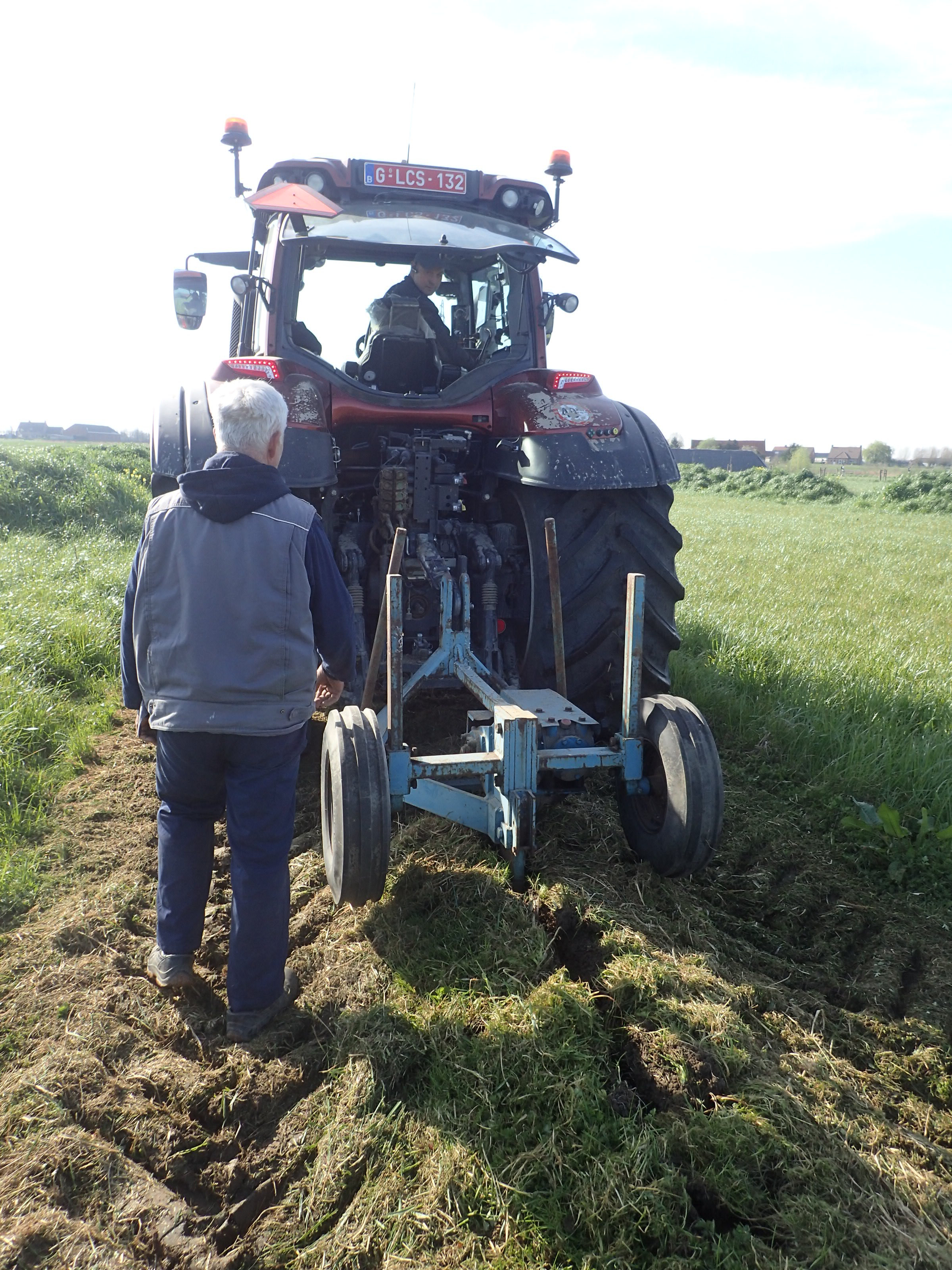
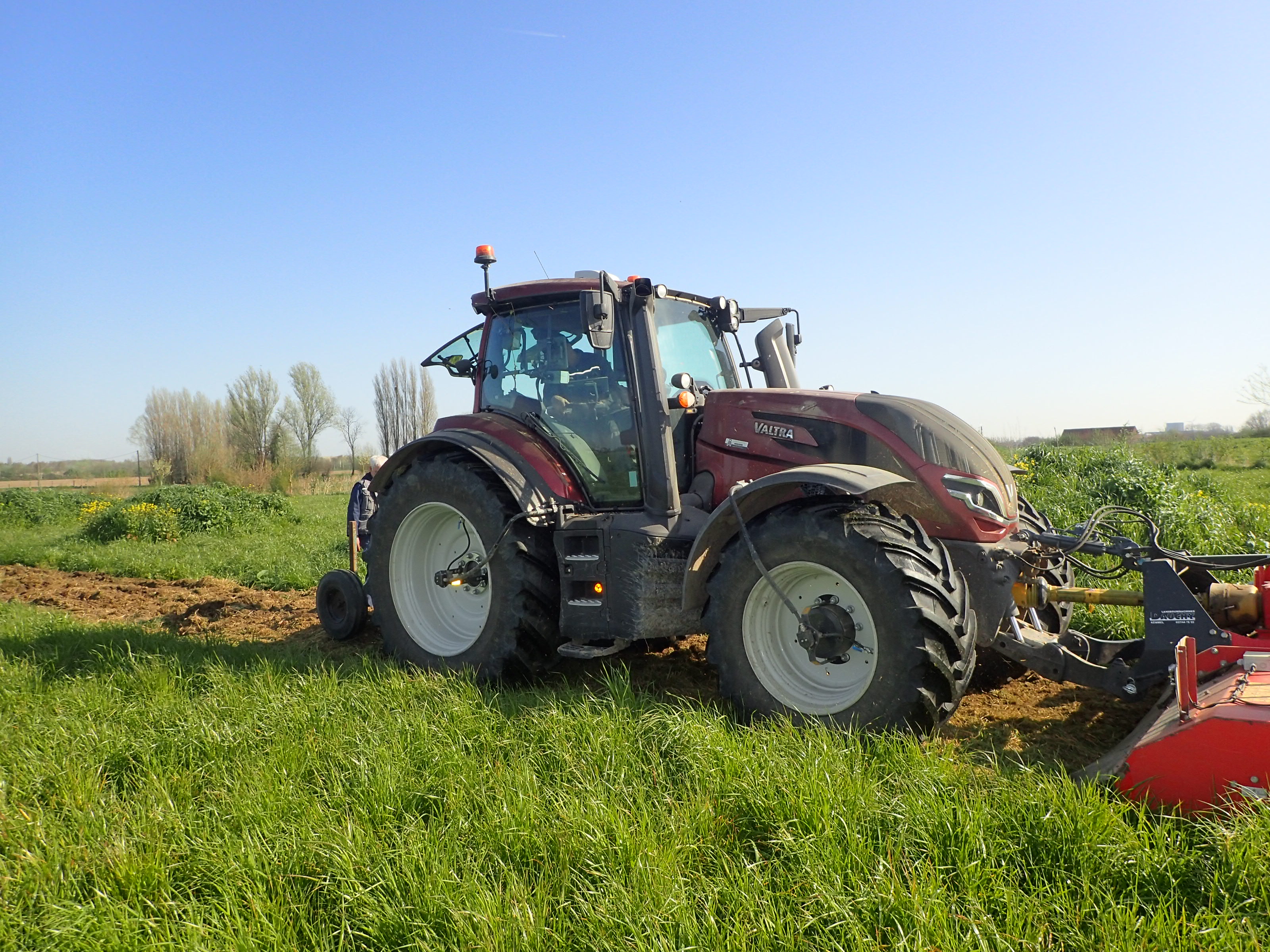
The first weed control treatment was done manually with the rotary tiller. The times after that, the weeder harrow was used. Using the weeder harrow gives a nice result. Driving is done next to the beetle bank with the weeder harrow unfolded. The teeth touch the full elevation and the height of the frame matches the top of the beetle bank. After these initial treatments, we immediately obtained a nice semi-circular beetle bank along the entire length and width of the tree lanes. Fiercer weeds that survive the weeding are weeded manually.


Construction of a beetle bank in figures
It is difficult to make a general estimate of the costs of constructing a beetle bank and the associated working hours. This is very situation-specific: dimensions of the beetle bank, construction with crane or plough, soil supply needed or not, availability of own equipment,...
The table opposite shows an overview of the works and costs linked to our specific situation and working method for the construction and sowing of our beetle banks. Specifically, we constructed two beetle banks: one 100 metres long and one 80 metres long. The renewal of the grass buffer strip is an exceptional job and we are therefore excluding it for the moment. The cost of the seeds (see below) and subsequent maintenance after sowing were also not included here.
In the end, the construction of the beetle banks took about 31 hours, representing a total cost of about 2100 euros (excluding VAT). A considerable amount, but as with any investment, we hope to reap the benefits of this in the long run. Note that considerable savings can be made by working with a plough instead of a crane.

The beetle bank will be sown with a specific mixture consisting mainly of pole-forming grasses supplemented by a limited proportion of annual and perennial herbs. Sowing density is 15 kg/ha and the cost price for the specific mixture is about 25 euro per kg (excl. VAT). For our two beetle banks, this means a quantity of 800 grams of seed and an associated seed cost of 20 euros. Sowing is best done manually.
And in the meantime...
Besides the major groundwork, we did not stand still in other areas. We harvested the ryegrass, maintained the hedge and the three remaining tree lanes, mapped the growth and flowering of the walnuts, monitored the soil and biodiversity,...
You can read more about this in the next edition of “Digging Deeper” in a few weeks' time.
New on our plot!
As of this spring, we can halt at our brand new info board during site visits to the plot. Using this attractive visual, visitors to the plot can see the complete planting design at a glance, the intended benefits of this system are highlighted and we highlight our research questions.
A great example of how we continue to focus on both communication, awareness and research on our plot.

IN THE PICTURE: groundwork on our plot